What a built-in bath is and why it is fashionable
A built-in bath is not a new concept. In many Mediterranean countries with their own construction tradition, baths built on-site using masonry and finished with tiles, render or microcement have always existed. What has changed in recent years is the context: the popularity of microcement and resin finishes, the rise of design bathrooms on social media and the desire for personalisation have led to more and more clients in Valencia requesting them.
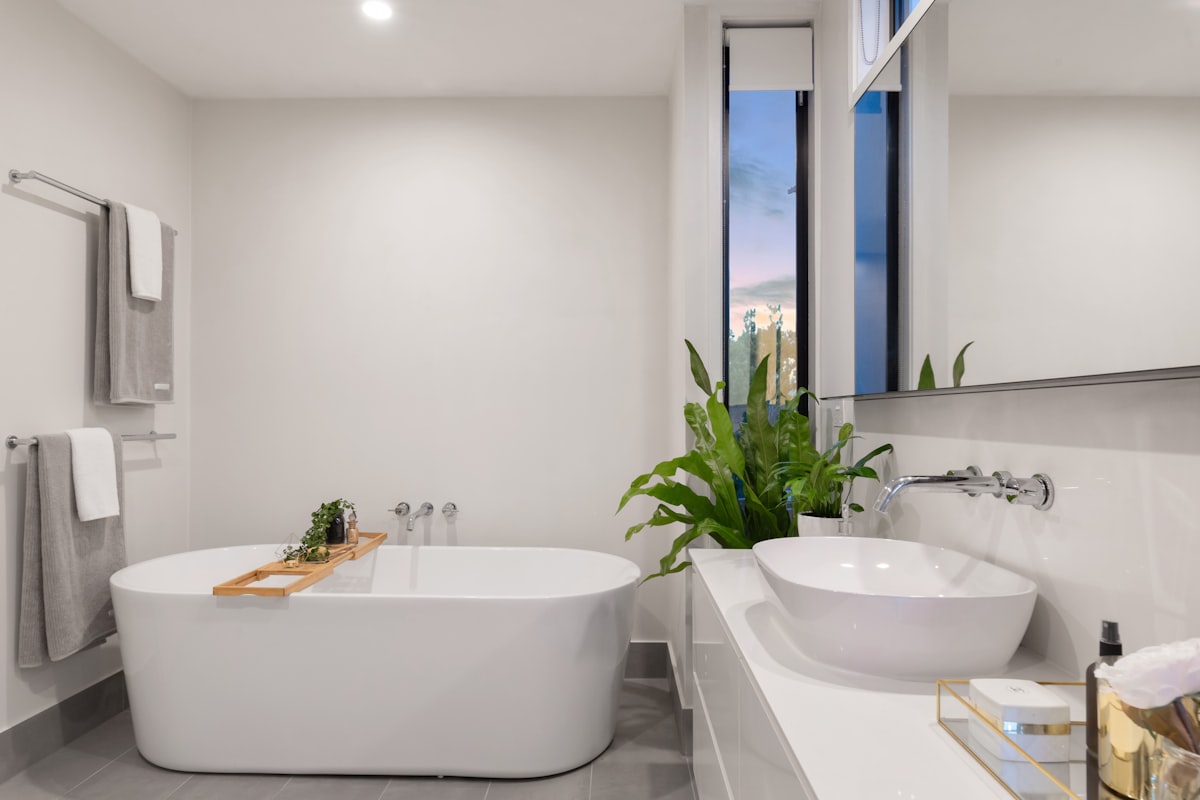
A built-in bath consists of constructing the structure using masonry (hollow brick, aerated concrete block or extruded polystyrene foam as filler) and finishing it with the desired material: tile, microcement, epoxy resin, natural stone or even treated wood on the sides.
A prefabricated bath, by contrast, arrives finished: acrylic, enamelled steel or cast iron. It is installed, connected to the drain and sealed around the perimeter.
The real cost of each option
Prefabricated bath
A standard mid-range acrylic bath (170x70 cm) costs between 300 and 1,500 euros in the showroom. Installation adds 200-600 euros in labour.
Real total for installed prefabricated bath: 500-2,100 euros depending on the model.
A premium freestanding mineral resin bath (Kaldewei or Laufen type) or cast iron can cost 2,000-5,000 euros for the piece alone, without installation.
Built-in bath
The cost breakdown:
- Structure: masonry (brick, mortar, waterproofing). Approximately 400-800 euros.
- Waterproofing: liquid membrane over the entire interior surface. Essential. 150-300 euros.
- Finish:
- Ceramic tile: 200-800 euros
- Microcement: 600-1,500 euros
- Epoxy resin: 500-1,200 euros
- Natural stone: 1,000-3,000 euros
- Taps and drain: 300-800 euros
- Total labour: 600-1,200 euros
Real total for built-in bath: between 2,000 and 5,000 euros.
A mid-sized built-in bath (170x80 cm) with microcement finish, correct waterproofing and mid-range wall-mounted taps, installed and finished, costs between 2,800 and 4,000 euros in Valencia in 2026.
Execution time
A prefabricated bath installs in 1-2 days once the space is ready.
A built-in bath requires 5-10 effective working days spread across different phases that cannot overlap (mortar must cure before waterproofing, waterproofing must dry before finishing, microcement must fully cure before sealing). In practice, with waiting times between phases, the process occupies 2-3 weeks of work in the bathroom.
Maintenance: where many regret their choice
Built-in bath with tiles
Grout joints are the Achilles heel. In a bath that regularly fills and empties with hot water, temperature variations and the weight of water create micro-movements in the structure. Over time, joint sealing deteriorates. The solution: use epoxy grout instead of cement (more water-resistant) and inspect and replace silicone sealing every 2-3 years.
Built-in bath with microcement
Technically possible but demanding on the material. The key is using microcement systems specifically for immersion zones (Topciment, Deco Cement or similar) with a minimum of 3 layers of moisture-resistant sealer. With that protection, service life can exceed 10-15 years. Without it, it can deteriorate in 3-5 years.
Prefabricated acrylic bath
Continuous surface with no joints, which eliminates the main problem of the built-in bath. Maintenance is minimal: regular cleaning with non-abrasive products, silicone perimeter check every 2-3 years.
Enamelled steel or cast iron
The most durable. The enamel can chip if struck hard, but under normal conditions lasts the life of the bathroom.
Common mistakes in built-in baths
1. Insufficient waterproofing: the most serious mistake. If the waterproof membrane does not reach all corners and does not extend sufficiently up the side walls, water seeps into the masonry structure.
2. Poor joint sealing: using cement grout instead of epoxy in tiled baths. Cement deteriorates faster under continuous moisture cycling.
3. Excessive weight: a large built-in bath full of water can weigh 800-1,200 kg including structure, water and person. In flats with old timber floors (common in pre-1960 Valencia buildings), this can be problematic. A technician should assess the floor’s load capacity before proceeding.
4. Drain without access register: the drain must be accessible for maintenance. A built-in bath without an accessible drain register is a problem when a blockage needs clearing.
Who is asking for built-in baths in 2026
The client profile that requests a built-in bath at Reformarte currently has fairly defined characteristics:
- Owner of a large bathroom (more than 8-10 m²)
- Client with a full renovation project, not just a bath replacement
- Person with design interest and willingness to invest in personalisation
- Owner of a second home or holiday rental wanting differentiation
What makes least sense is a built-in bath in a small bathroom (under 6 m²), in a bathroom primarily for practical use (children, heavy daily use), or in a project with a tight budget.
If you are considering a built-in bath for your project, our budget calculator lets you tell us the details and we give you a concrete assessment.
Calculate your bathtub-to-shower swap price
Fixed price regardless of size