The freestanding bath is the bathroom element that appears most in interior design features and the one that most often disappoints when installed without proper thought. Not because it’s bad, but because there are conditions that must be met for it to work properly.
We’ve been installing freestanding baths in bathrooms across Valencia and the province for years. We’ve seen everything: bathrooms where it looks spectacular, and bathrooms where six months later the client admits they don’t use it because it’s uncomfortable to clean or because the water gets cold in two minutes.
Here’s what nobody tells you in the showrooms.
What a freestanding bath is
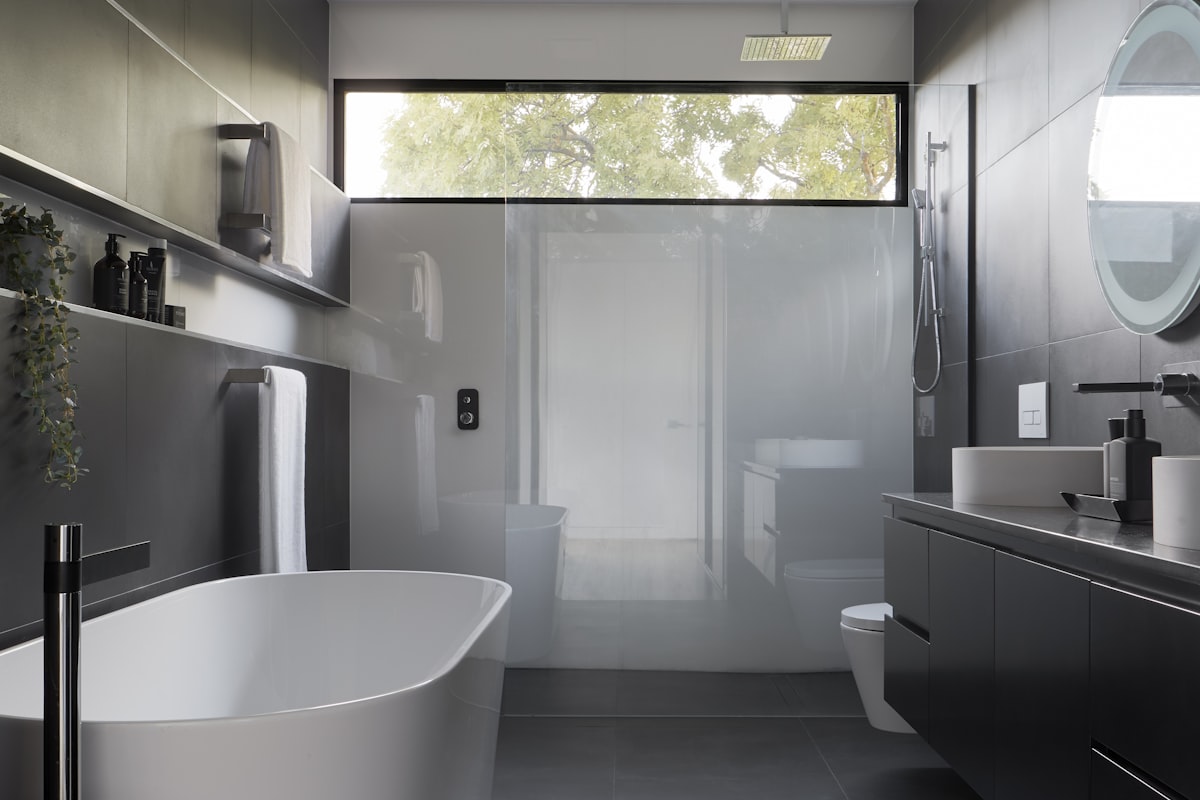
A freestanding bath is one that’s not built-in or against a wall. It stands alone at some point in the bathroom, with its entire perimeter visible. It can stand on legs (classic claw-foot or modern cylindrical legs), on its own base or plinth, or simply resting directly on the floor with its base covered.
Taps for a freestanding bath can be on the bath rim itself, but in the most elegant models they come from a floor-standing tap column or from the ceiling (ceiling-mounted tap, more complex and expensive). The water supply is in the floor or in the wall at a low level.
Space: the first filter
The freestanding bath needs clear space around it to fulfil its visual and practical function.
Minimum recommended clear space:
- At least 60cm free on the most accessible sides to get in and out comfortably
- At least 50cm on less-used sides (to clean behind)
- The bath itself is typically 160-190cm long and 70-90cm wide
Adding it up: a 170x80cm freestanding bath needs a space of at least 290x200cm just for the bath and access zone. That’s nearly 6m² just for the bath.
For the complete bathroom to make sense (shower, WC, sink vanity), you need a bathroom of at least 10-12m². In smaller bathrooms, the freestanding bath overwhelms the space and becomes an obstacle rather than a design element.
The plumbing challenge
This is the most expensive technical aspect and the one most frequently underestimated.
The water supply
In a built-in bath, the water supplies are in the wall, next to the bath. Easy and economical. In a freestanding bath, the supply must be in the floor (if using a floor-mounted tap column) or it runs up the wall to the bath with an exposed pipe.
The floor supply means breaking the existing floor to run plumbing to the exact point where the bath will sit. This only makes sense if you’re doing a complete bathroom renovation and the floor is being replaced anyway.
The waste
The trap and waste pipe also go through the floor. In complete renovations this is planned from the start. In partial renovations, this is the point that most increases cost.
Who actually uses a freestanding bath
There are two types of clients who ask for freestanding baths:
Those who will genuinely enjoy it: people who use the bath regularly (at least 2-3 times a week), who have a large bathroom, who value the bath ritual as a relaxation moment.
Those who want it for aesthetics and won’t use it: more common than you’d think. The client who never actually soaks in a bath, always showers, is always in a rush in the mornings, but wants the freestanding bath because it looks good. Six months later, the bath sits unused and becomes expensive décor that needs cleaning behind it.
Before installing a freestanding bath, ask yourself honestly: how many times a month do I actually take a bath right now? If the answer is less than 4, a freestanding bath is probably not for you.
Real price of a freestanding bath
| Type | Bath price only |
|---|---|
| Basic acrylic (Roca, Vitra) | €800-1,500 |
| Mid-range reinforced acrylic | €1,200-2,500 |
| Enamelled steel (Kaldewei, BetteFloor) | €1,800-3,500 |
| Mineral composite (Duravit SolidSurface) | €2,000-4,000 |
| Reconstituted stone (Victoria+Albert) | €3,000-5,000 |
| Cast iron (classic range) | €2,500-6,000 |
Adding:
- Floor-standing or column tap: €300-1,500 depending on brand and design
- Installation (plumbing + placement): €400-800 in a full renovation, more if the floor needs opening
Realistic minimum total: €1,500-2,500 for a decent freestanding bath with taps and installation.
Materials and brands
Reinforced acrylic: most economical and lightest. Roca (their Happening Free-Standing collection) is most installed for availability of spare parts and technical service.
Enamelled steel: heavier, colder initially to the touch, but very durable. Kaldewei and BetteFloor are sector references. Their baths carry 30-year guarantees.
Mineral composite / SolidSurface: warm to the touch, matte, very resistant. Duravit has solid freestanding composite collections. Accepts surface scratch repairs with fine sandpaper.
Reconstituted stone: Victoria+Albert (British brand available in Spain) makes Quarrycast baths. Very heavy (up to 120kg empty), retain water heat extraordinarily well, and have a unique appearance.
Maintenance: what nobody mentions
Cleaning behind and under a freestanding bath is uncomfortable. You have to bend down, manoeuvre a mop in a narrow space and dry well to prevent mould. If the floor has grout joints, the area behind the bath is where grout blackens first.
Practical solutions:
- Leave at least 60cm behind the bath for a person to kneel and clean
- Use a grout-free floor (microcement or continuous surface) under and around the bath
- Choose a bath on a solid base (rather than open legs) so there’s no space underneath to accumulate dirt
Frequently asked questions
Can I have a freestanding bath and a shower in the same bathroom? Yes, and it’s the most common combination in large renovated bathrooms. The freestanding bath for relaxing, the shower for daily use. You need at least 10-12m² for both elements to coexist comfortably.
Does water cool faster in a freestanding bath? Slightly, because the entire outer surface is exposed to air. Stone composite and thick steel baths retain heat better. If the bathroom is well heated, this usually isn’t a real problem.
Do I need floor reinforcement for a freestanding bath? Acrylic or composite baths aren’t particularly heavy (50-90kg empty). With water and person they can reach 300-400kg, but distributed across the entire base. Very heavy cast iron or stone baths (120-150kg empty) should have the floor structure verified, especially on upper floors of older buildings.
If you’re considering a freestanding bath as part of a larger renovation, first check what the whole project might cost with our bathroom renovation calculator. And if you’re deciding between bath and shower, read our article on changing bathtub to shower: price and process for the full picture.