That bathtub has been there for 20 years. And you probably haven’t had a proper bath in it for 10.
We’re not judging you. It happens to almost everyone.
You bought the flat (or inherited it, or rented it) and the bathtub was already there. White, big, with its plastic curtain and its slightly dripping tap. For a while you used it: bubble baths on Sundays, bathing the kids at night. But gradually you stopped filling it. The hot water takes too long, your back can’t take the position, and honestly, for a five-minute shower, the bathtub just gets in the way.
In flats along Avenida del Puerto, 1980s bathtubs are everywhere. You find them in Ruzafa, Benimaclet, Torrent. Cast iron or acrylic bathtubs that weigh a ton, yellow with age and that nobody — let’s be honest — actually uses for bathing.
We’ve been removing bathtubs for 12 years. And in that time, exactly 2 clients have asked to put one back. Two. In twelve years. That should tell you something.
If you’ve been thinking about changing yours for a while, this article will give you 8 very specific reasons to stop thinking and start acting. No drama, no pressure — just data and common sense.
1. You’re using much more water than you think
This is the figure that surprises people most when you put it in black and white.
Filling a standard bathtub uses between 130 and 200 litres of water per use. If you fill it to the halfway mark (the minimum for it to make any sense), that’s already around 133 litres. According to data from the National Statistics Institute (INE), average water consumption per person in Spain is around 133 litres per day — for everything: cooking, cleaning, drinking and personal hygiene. Having a bath in the tub literally uses in one go what should last you the whole day.
A 5-minute shower with an efficient showerhead uses between 40 and 50 litres.
The difference is staggering.
And we’re not just talking about water. Heating 133 litres requires far more energy than heating 50. Your gas or electricity bill notices every month. A family of 3-4 who switches from bathtub to shower can save between 15,000 and 25,000 litres of water per year. In monetary terms, that’s between 80 and 150 euros annually in water and energy alone.
Calculate how much it would cost to switch to a shower with our configurator — includes a savings estimate.
2. The bathtub is the most dangerous spot in your home
This isn’t an exaggeration. It’s a fact.
According to reports from the World Health Organisation and data collected by Spanish health authorities, 80% of domestic bathroom accidents occur in the bathtub or when getting in and out of it. Slips, falls when lifting a leg to get in, bumps against the edge.
And it’s not just a problem for elderly people. Anyone can slip in a wet bathtub at 7 in the morning, half asleep, in a rush to get to work.
Bathtub edges are usually between 50 and 60 centimetres high. Think about that: every day you lift your leg half a metre over a wet, slippery surface. It’s like a balance exercise you do without thinking, until the day you fail.
A flush shower with a non-slip tray eliminates that risk entirely. No step, no edges, no acrobatics. If you want to explore accessibility options in depth, we have a complete guide to accessible bathrooms.
3. Cleaning it is torture
Come on, it’s not just you. Everyone hates cleaning the bathtub.
Those corners where the wall meets the bathtub edge collect limescale, soap and mould with astonishing efficiency. The silicone seal goes black within months. The plastic curtain (if you still have one) develops stains that not even bleach can remove. And bending down inside the bathtub to scrub the bottom is agony for your back.
A modern shower has fewer corners, fewer joints and smoother surfaces. A resin tray, a glass screen and a couple of walls tiled with large-format porcelain can be cleaned in half the time. No curtains. No impossible nooks.
It’s not just about aesthetics. It’s time in your life you get back every week.
4. The kids stop using it sooner than you think
This is the most repeated argument in favour of the bathtub: “I need it to bath the children.”
And it’s true. For bathing a baby or a 1-2 year old, the bathtub is convenient. But let’s be honest: that phase is very short. From age 3-4, most children shower. By 6, they want to shower on their own. By 10, the bathtub seems babyish to them.
We’re talking about 3-4 years of real use versus the 20-30 years the bathtub will be taking up space in your bathroom. That’s a very inefficient use of space.
And for those early years there’s a very simple solution: foldable baby baths. They cost 30 euros, store in any cupboard and do the job perfectly. You don’t need a permanent 170x70-centimetre installation for something you’ll use for 3 years.
5. It takes up space that a shower uses far better
A standard bathtub measures 170 x 70 centimetres. That’s 1.19 square metres of floor space. In a 4-5 square metre bathroom (the typical size in Valencia flats), the bathtub takes up between a quarter and a third of the entire space.
And it takes it up in the worst possible way: with a closed rectangle, high walls, making the bathroom feel smaller than it is.
A walk-in shower with fixed glass takes up the same space or less, but because it has no opaque walls, the sense of spaciousness multiplies. And if your bathroom is really small, a compact wet room configuration can make use of every last centimetre.
The difference between a bathroom with a bathtub and the same bathroom with an open shower is like the difference between a flat with closed doors and the same flat with open doors. The space is the same, but the experience is completely different.
6. Your bathroom looks like it’s from the 90s
There’s no gentle way to say it.
A white bathtub with beige tiles, a decorative border and a plastic curtain screams “1994” from every angle. And not in a good way. It’s not vintage. It’s not retro-chic. It’s simply a bathroom that’s been left behind.
Aesthetics matter. Not out of vanity, but because you spend time in this space every day. A bathroom you like — with current materials, clean lines and good lighting — makes you start the day differently.
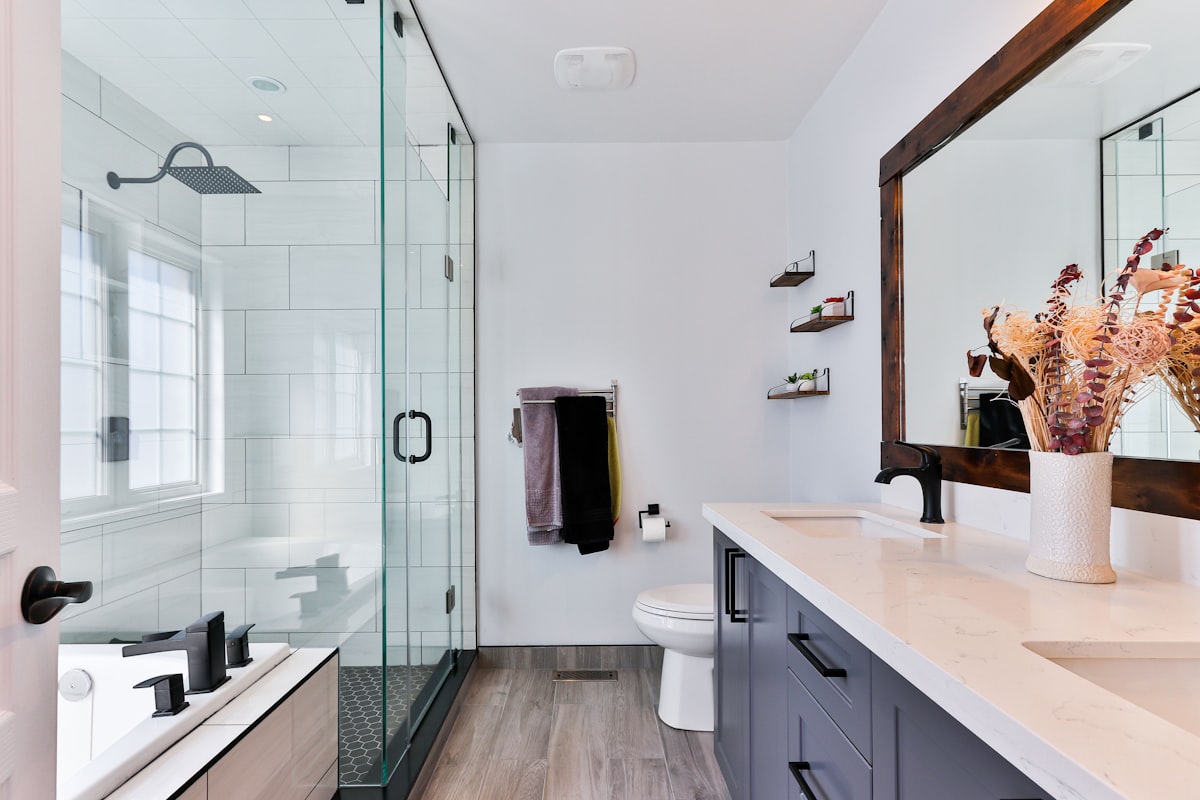
Modern showers with glass screens, large-format porcelain and concealed taps visually transform the bathroom. You don’t need to spend a fortune: with the right materials and good design, the change is spectacular. You can see real design options at Roca or explore our catalogue to find your style.
The bathtub’s days are numbered.
7. For the older members of your family, it’s a real barrier
This problem is serious. And increasingly urgent.
Spain is one of the most aged countries in Europe. Many elderly people live alone in flats they bought 30 or 40 years ago, with bathtubs that now pose a real danger. Getting into the bathtub requires balance, leg strength and stability — three things that diminish with age.
The consequences are not trivial. A fall in the bathroom for a 75-year-old can mean a hip fracture, hospitalisation and a loss of independence that is often never recovered.
Swapping the bathtub for an accessible shower — with a flush tray, grab bars, non-slip floor and thermostatic taps — isn’t a luxury. It’s a safety measure that can make the difference between your parent continuing to live at home or having to move.
If you have elderly family members, this isn’t a change for “some day.” It’s for now. Check our guide on accessible bathroom regulations in Spain to learn about available grants.
8. It’s reducing your property’s value
If you ever think about selling or letting your flat, the bathtub is costing you points.
Young buyers (25-45, the most active segment in the market) want showers. They want modern, functional bathrooms with a clean, contemporary look. An 80s or 90s bathtub is the first thing they note as “needs work” when viewing a flat.
According to studies published by Spanish property portals, a bathroom renovation can increase a property’s value by between 5% and 8%. And the bathtub-to-shower conversion is the bathroom renovation with the best cost-to-value-added ratio. We have a full article on how bathroom renovation increases your property’s value.
Put another way: the money you invest in switching the bathtub for a shower isn’t a cost. It’s an investment you recover (and often exceed) if you decide to sell.
Calculate the price of your switch with our configurator — it takes less than a minute.
The exception: when it makes sense to keep the bathtub
We’re not going to tell you every bathtub in the world should disappear. There are situations where keeping it is the right call:
- You have a large bathroom (over 8 m²) and room for both. If you can have a shower and a bathtub, fantastic. Best of both worlds.
- You have very young children (0-3 years) and no other bathroom at home. In that case, it may make sense to wait a couple of years before making the switch.
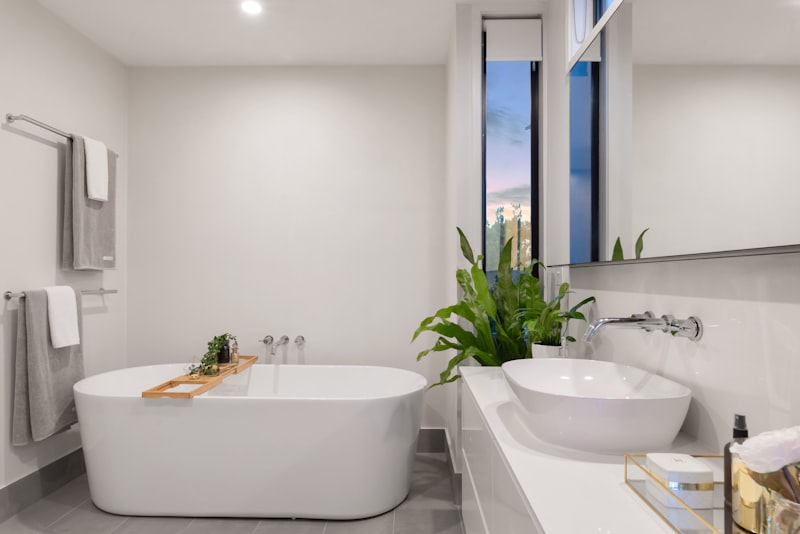
- Your property is high-end and the bathtub is a design feature. A freestanding designer bathtub in a grand bathroom is an entirely different thing from the built-in tub in a 70-square-metre flat.
- You actually take baths regularly. If you’re the kind of person who has a real bath once or twice a week and genuinely enjoys it, we’re in no position to take that away from you. Just make sure you also have a quick shower option for daily use.
In all other cases, the bathtub is taking up space you could use far better.
Frequently asked questions
Does changing the bathtub to a shower require building work?
Yes, but it’s not major work. The whole process takes 3 to 5 working days. The bathtub is removed, the plumbing is adapted, waterproofing is applied, the shower tray is installed, the area is tiled and the screen and taps are fitted. No rubble or dust throughout the house. If you want to know more, we have a guide on how to change the bathtub to a shower without major work.
How much does it cost to swap the bathtub for a shower?
It depends on the finish, but the ranges in Valencia in 2026 are: basic 2,500-3,500 euros, standard 3,500-5,000 euros, premium 5,000-7,500 euros. All prices include materials, labour, plumbing and final clean-up.
Do I need planning permission?
For a standard bathtub-to-shower conversion, a responsible declaration is all that’s needed. You don’t need a major works licence or permission from the residents’ association. It’s an interior renovation that doesn’t affect the structure or common elements.
Can it be done without changing all the bathroom tiles?
Yes. With the basic option, only the tiling in the area the bathtub occupied is renewed. The rest of the bathroom stays untouched. It’s the fastest and most economical approach.
What if I change my mind — can I put a bathtub back?
Technically yes, but in our experience it doesn’t happen. As we mentioned: in 12 years, only 2 clients have asked for it. Once you experience the convenience of a flush shower, there’s no going back.
The change starts with a decision
If you’ve read this far, you probably already know what you want to do. The bathtub is limiting you: it wastes water, takes up space, looks outdated and is a little more uncomfortable every day.
Switching to a shower is one of the renovations with the best cost-to-satisfaction ratio out there. It improves your daily life, increases your property’s value and transforms a space you use every day.
At Reformarte we help you through the entire process:
- Fixed price with no surprises
- 3-year warranty on all work
- Free technical survey to measure, advise and quote
- 3-5 days of work, fully managed
Start now: use our configurator to calculate the price of your new shower or explore designs like the walk-in invisible or the compact wet room to see what’s possible.
If you want to keep researching, take a look at 7 signs you need to change your bathtub to a shower or our guide to bathroom renovations in Valencia.
Your familiar bathroom, but as it should have been from the start.
Calculate your bathtub-to-shower swap price
Fixed price regardless of size