Real life isn’t Pinterest
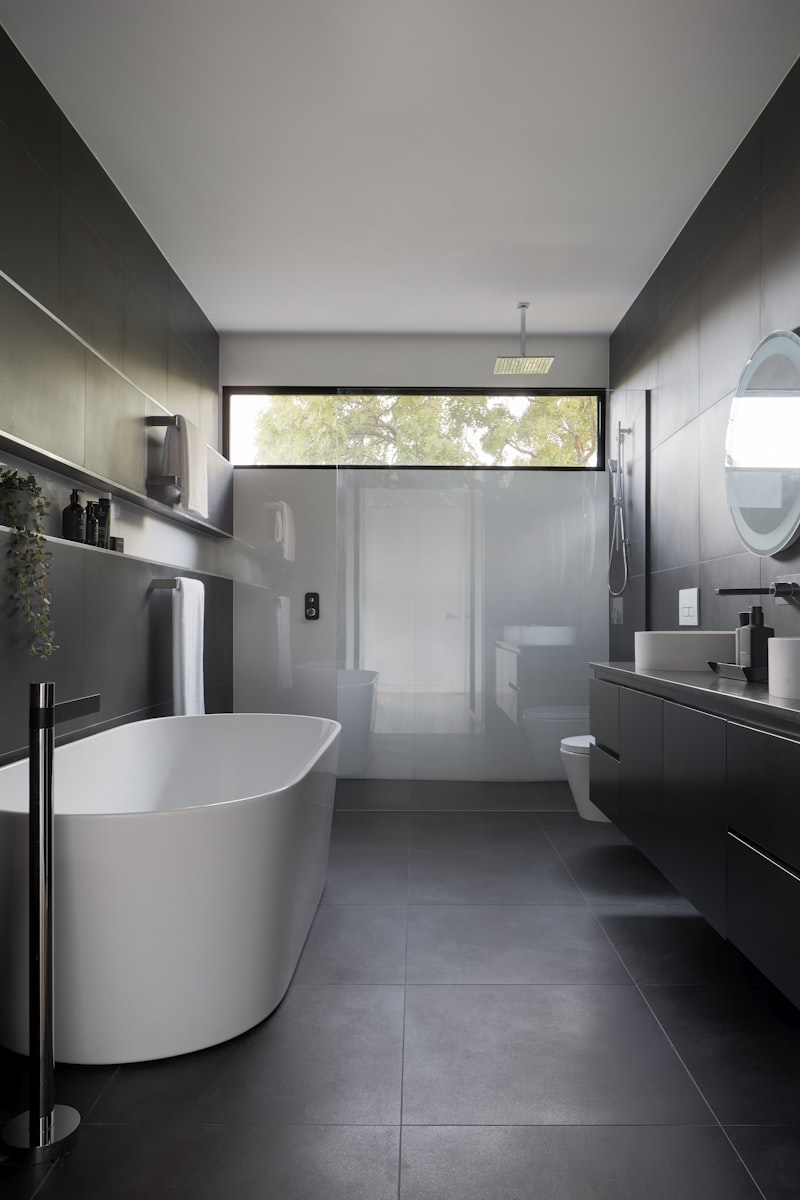
On Pinterest, family bathrooms are spacious rooms with freestanding bathtubs, pristine white marble floors and towels folded like in a spa. In real life, a family bathroom is where three kids bathe at the same time splashing water up to the ceiling, where someone leaves the shampoo bottle open upside down, and where wet floors are a constant between 7 and 9 pm.
In a flat in Campanar, a family with 3 children asked us for an indestructible bathroom. Their previous bathroom had slippery tiles, a single sink where they fought every morning, a tall cabinet the kids climbed onto the countertop to reach, and a bathtub with a single-lever mixer that had given them more than one scare with hot water. We designed a bathroom that has been working flawlessly for two years. Here are the decisions we made and why.
If you’re planning a family bathroom renovation, our calculator gives you an estimated budget taking into account the elements you need.
Safety: the first priority and the one that matters most
A bathroom is the most dangerous room in the house for a child. Wet floors, hard surfaces, hot water, cleaning chemicals within reach, corners at head height. This isn’t scaremongering — it’s statistics. 35% of childhood domestic accidents happen in the bathroom. The good news is that most can be prevented with design decisions.
Anti-slip flooring: non-negotiable
The bathroom floor must be anti-slip Class C (the highest). This isn’t a recommendation — it’s a red line. A barefoot child with wet, soapy feet on polished porcelain is an accident waiting to happen.
What works: porcelain tile with a textured or matt finish, Class C. Manufacturers specify this in the technical data sheet. Pamesa, Keraben and Vives have anti-slip finish lines that don’t look like changing room floors — they look like normal floors but don’t slip.
What to avoid: polished porcelain (looks lovely, is an ice rink), natural marble (even worse), smooth ceramic.
Price: a Class C anti-slip porcelain tile costs the same as a polished one — €18–40/m². There’s no economic excuse not to use it.
For more information on accident prevention, read our complete bathroom safety guide.
Thermostatic mixer: non-negotiable
This is the most important thing we want to tell you in this entire article. A single-lever mixer lets a child turn the hot water up to maximum without limitation. Water from the boiler can come out at 60–70°C. A second-degree burn on a child’s skin occurs in 3 seconds at 60°C. Three seconds.
A thermostatic mixer has a safety stop at 38°C. The water comes out at whatever temperature you choose and won’t go above the limit even if someone turns the handle to maximum. To exceed 38°C you have to press a specific button that children won’t reach or discover by accident.
Price: a shower thermostatic mixer costs around €150–250 (Roca T-1000 at €180, Grohe Grohtherm 1000 at €220, Tres Griferia at €200–280). Compared to a single-lever mixer at €50–80, we’re talking about a €100–170 difference. It’s the best safety investment you can make in a bathroom with children. And when we say it’s non-negotiable, we mean it.
Rounded edges and corners
Bathroom furniture with sharp edges at 70–80 cm from the floor is right at head height for a 2–4 year old. A knock against a melamine corner at that height can be serious.
Design solutions:
- Bathroom vanity with rounded edges (not more expensive, just needs to be specified to the manufacturer).
- Countertop with a rounded or bevelled edge.
- Tempered glass shower screen with polished edges (mandatory by regulation, but verify compliance).
- If the screen has an aluminium profile, it should have rounded edges.
Cleaning products and medication: out of reach
This isn’t design, it’s common sense, but it affects storage planning. Everything toxic goes in a high cabinet with a safety lock. Not in the vanity unit under the sink — which is exactly where children look first.
Bathtub or shower: the family decision
This is the million-dollar question for families with children. And the answer isn’t as simple as “shower because it’s more modern.”
The case for the bathtub
- Children under 5–6 years: bathing a baby or small child in a bathtub is infinitely more comfortable than in a shower tray. The bathtub contains the water, the child can play sitting down and you don’t end up soaked.
- Bathing two or three at once: with two or three small children, the bathtub lets you bathe them together. In a shower, it’s chaos.
- Family relaxation: children love water. A bubble bath is one of the most wonderful rituals of childhood. A shower doesn’t offer that.
The case for the shower
- Children over 7–8 years: from a certain age, children shower on their own. The bathtub stops being used as such and becomes an uncomfortable shower with a curtain.
- Space: an 80x120 shower tray takes up less room than a 150x70 bathtub and leaves space for additional storage.
- Future accessibility: a floor-level shower is safer long-term, including when the children grow up and the parents age.
- Water consumption: a bath uses 150–200 litres. A 5-minute shower uses 40–60 litres.
Our recommendation for families
If you have two bathrooms: bathtub in the children’s one, shower in the main one. If you only have one bathroom and the kids are small: bathtub now, with plans to convert to a shower in 6–8 years (leave the plumbing prepared for the switch). If you only have one bathroom and the kids are already over 6: go straight for a shower.
We have a complete bathtub vs shower guide that goes deeper into this decision with prices and scenarios.
Smart storage: at two heights
Storage is where most family bathrooms fail. Either everything is up high (and the kids can’t reach) or everything is down low (and the kids access what they shouldn’t).
Children’s zone (60–100 cm height)
- Towel hook at their height: a towel rail or hook at 70–80 cm so they can hang their towel themselves. It’s not just practical — it teaches independence.
- Open shelf for their things: an accessible shelf with their toothbrush cups, bath toys (if any) and shower gel. Open, not with a door — a 4-year-old struggles with cabinet doors but knows how to use a shelf.
- Integrated step or stool: to reach the sink. Loose stools shift and fall over. A fixed step under the vanity (like a pull-out drawer) is safer and is always where it should be.
Adult zone (120–180 cm height)
- Mirror cabinet: for medications, cleaning products, razors and everything children shouldn’t touch. With a magnetic or push catch — no padlock needed, just something that won’t open with a tug.
- High shelf: for clean towels, spare products, hairdryer.
Storage inside the shower or bathtub
Suction-cup shelves are cheap and fall off under weight. Hanging baskets on the taps rust. What actually works:
- Recessed wall niche: a 30x40 cm recess in the shower partition, at two heights (one for adults at 150 cm, one for children at 80 cm). Construction cost: €60–120. Result: permanent storage that doesn’t fall, doesn’t rust and doesn’t accumulate limescale underneath.
- Tiled ledge: similar to the niche but as a protruding shelf. Easier to create if the partition is thin.
Adventure-proof materials
Walls
Children splash. And when we say splash, we mean water reaches places you didn’t think possible. Family bathroom walls need:
- Tiles up to the ceiling (or at least to 2 metres): anti-moisture paint can’t handle constant splashing. Tiles can. In a children’s bathroom, the splash zone isn’t just the shower — it’s the entire bathroom.
- Epoxy grout: conventional cement grout absorbs water and blackens with mould. Epoxy grout is waterproof, absorbs nothing and cleans with a cloth. It costs 30–40% more than cement grout but lasts three times longer without maintenance.
- Light colours but not pure white: pure white shows every splash, every fingerprint. An off-white, light grey or soft beige disguises daily marks better without darkening the bathroom.
Floor
We’ve already said anti-slip Class C. Additionally:
- Medium format (30x60, 45x45): large formats have fewer grout lines (good) but if a tile breaks, replacement is more expensive and noticeable. Medium format is a good balance.
- Medium colour: neither white (looks dirty within minutes) nor black (shows every limescale drop). Medium grey, beige, ceramic wood in a natural tone — all work well.
Vanity unit
- Water-resistant material: quality melamine or lacquer. No untreated natural wood — a child with wet hands opening the drawer three times a day for 10 years destroys untreated wood.
- Drawers instead of doors: drawers let you see all the contents at a glance. Cabinets with doors become black holes where things disappear.
- Integrated handle or push-open: protruding handles are at a child’s hip height. If they run past (and they will run past), they’ll catch on them. Recessed handles or push-to-open systems eliminate the risk.
Our White & Natural Wood design combines white lacquered furniture with wood details — water-resistant, easy to clean and with a warm look that ages well.
Double sink: is it worth it?
In families with two or more children (or two adults getting ready at the same time in the morning), a double sink eliminates conflicts. But it has requirements:
- Minimum width: you need at least 120 cm of vanity for two functional sinks. Ideally 140–160 cm.
- Additional cost: a double vanity costs €400–800 more than a single. Plus the second tap (€60–150) and additional plumbing.
- Is it worth it?: if your bathroom has the space and the family has more than three people, yes. It radically reduces morning bottlenecks. If it’s just two adults and one child, probably not.
Smart alternative: an extra-long countertop basin (80–100 cm) with a single tap. Two people can wash their hands or brush their teeth at the same time without needing two taps. Cheaper, simpler, nearly the same functional result.
Design that ages well: neither childish nor boring
The most common mistake in family bathrooms is designing them “for children.” Tiles with cartoon characters, primary colours, animal stickers on the walls. The problem: in 3 years the child has grown and the bathroom looks like a nursery.
The golden rule
Design for adults, adapt for children with removable elements. The bathroom itself (tiles, floor, vanity, fixtures) should have a timeless design that works for 15–20 years. The childish touches go in the accessories: colourful towels, fun toothbrush cups, a patterned shower curtain, bath mat, a soap dispenser in a quirky shape. All of that changes in 5 minutes when the children grow up.
Colour palettes that work long-term
- White + natural wood: always current, conveys warmth, works with accessories of any colour.
- Light grey + white: clean, modern, neutral. Colour accents go in towels and accessories.
- Beige + soft green: warm, relaxing, different without being risky. Works especially well with natural light.
Our Candy Pastel design shows that a bathroom can have personality and colour without being childish — it’s a palette that works for children and adults alike.
Lighting: practical and safe
- General lighting: recessed LED ceiling light, IP44 minimum (splash protection). Neutral tone (4000K) so colours look true.
- Mirror lighting: essential for adults getting ready. Linear LED or side wall lights at 170–180 cm height.
- Night light: a low-energy LED strip at floor level or under the vanity, with a motion sensor. When a child gets up at night to use the bathroom, they have enough light to find their way without being dazzled or fully waking up. Cost: €15–30. Impact: enormous.
- Switches: out of reach of small children (120 cm height) or with anti-tamper protection. Switches inside the shower area are illegal — but make sure your electrician knows that.
Ventilation: the forgotten element in family bathrooms
A family bathroom generates more steam than an adults-only one. Three consecutive baths in the evening, morning showers, wet clothes hanging — humidity builds up fast.
- Timed extractor: one that continues running 15–20 minutes after the light is turned off. Extractors that only work while the light is on don’t remove enough moisture because steam continues escaping after the tap is closed.
- Capacity: for a family bathroom, minimum 90–120 m³/h extraction. The 60 m³/h extractors that come as standard in many new builds are insufficient.
- Door ventilation grille: a 2 cm gap under the door or a grille in the door panel allows dry air from the hallway to enter, facilitating circulation. Without air intake, the extractor works against a vacuum and loses efficiency.
Indicative budget: complete family bathroom
For a family bathroom of 5–6 m² with everything mentioned:
| Item | Budget range | Mid-range |
|---|---|---|
| Shower tray or bathtub | €150–250 | €300–500 |
| Double-sink vanity | €400–600 | €700–1,100 |
| Thermostatic mixer (shower) | €150–200 | €220–350 |
| Basin tap (x2) | €80–160 | €140–250 |
| Toilet | €140–200 | €250–400 |
| Wall tiles | €300–500 | €500–800 |
| Anti-slip floor | €120–200 | €200–350 |
| Shower screen | €200–350 | €400–700 |
| Labour | €1,800–2,500 | €2,500–3,500 |
| Estimated total | €3,340–4,960 | €5,210–7,950 |
For a budget tailored to your specific bathroom, use our calculator.
Frequently asked questions
At what age can children shower on their own?
It depends on the child, but as a general guide: from age 6–7 they can start showering with distant supervision (you’re outside but with the door ajar). By 9–10, most shower completely independently. The thermostatic mixer is key so they can do it safely from the start.
Is a shower screen or shower curtain better for families?
Tempered glass screen, without a doubt. A shower curtain fills with mould, clings to the body, lets water through the sides and needs replacing every 6–12 months. A 6 mm tempered glass screen cleans with a squeegee after each use and lasts 15+ years. The investment is worth it.
How do I stop the bathroom smelling of damp with so much use?
Three keys: a powerful timed extractor (120 m³/h), epoxy grout instead of cement (doesn’t absorb moisture) and don’t leave wet clothes hanging inside the bathroom. If you notice a persistent damp smell, check the silicone around the shower tray and the toilet joints — they’re usually the main sources.
Is underfloor heating worth it in a family bathroom?
If you’re installing it throughout the rest of the house, extending it to the bathroom is relatively cheap (€200–400 extra). If it’s only for the bathroom, the cost-benefit doesn’t stack up versus a quality bath mat and an electric towel warmer. Underfloor heating takes 30–40 minutes to warm up — for the occasional use of a bathroom, it doesn’t arrive in time.
How do I protect furniture from the water children splash?
Water-resistant melamine or lacquered vanity (not natural wood). Raised legs or wall-mounted unit (minimum 10 cm off the floor) so water doesn’t get trapped underneath. Silicone seal between the countertop and the wall. And most importantly: drawers with soft-close runners — a child slamming drawers 10 times a day destroys cheap runners within a year.
A bathroom to grow in (for the whole family)
The perfect family bathroom doesn’t exist. But a family bathroom that works does. It’s one with a floor you don’t slip on, water that doesn’t scald, a place for everyone’s things and materials that can handle the pace of real life.
You don’t need to spend a fortune. You need to think well before deciding. Smart choices — thermostatic instead of single-lever, anti-slip instead of polished, niches instead of suction-cup shelves — cost the same or a little more and make the difference for 15 years.
At Reformarte we design family bathrooms thinking about how they’re really used, not how they look in a photo. If you’re in Valencia or the surrounding area and want a bathroom that works for the whole family, tell us about your case. We’ll see the bathroom, listen to what you need and propose a design that makes your life easier. No commitments, no surprises.