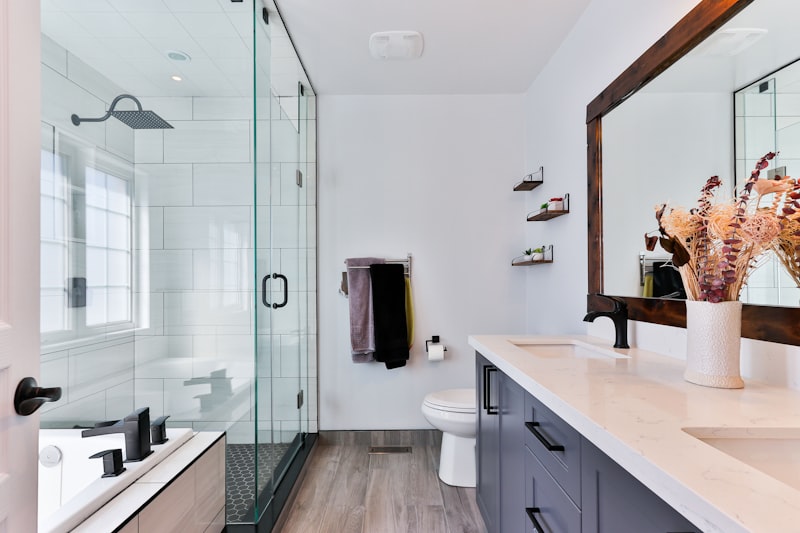
When a client has approved the tiles, shower screen, sanitary ware and vanity, sometimes we reach the end of the process and there’s an uncomfortable moment: “what colour grout do you want?” Many answer “white, I suppose”, as if it were a minor detail.
It isn’t.
Grout colour can completely transform the final result of a bathroom. The same white tiles with white grout give a completely different effect from the same tiles with dark grey grout. That difference can mean the bathroom looks like a design hotel bathroom or one from the 1990s.
Why grout colour matters so much
The grout is the network of lines that visually structures all the tiling. Depending on tile format, it can represent between 5 and 20% of the total visible surface. It’s not a detail — it’s part of the design.
There are three different visual effects depending on grout colour:
Contrast: the grout stands out against the tile, emphasising the pattern.
Integration: same-tone grout makes the joints practically invisible. The eye perceives the tiling as a more continuous surface.
Design line: dark grout on light tiles (or vice versa) can become an intentional graphic element, like black grout on white metro tiles.
White grout: the classic with a serious problem
White grout is the most chosen by default. The problem is that it gets dirty.
White grout in a bathroom floor, especially near the shower, stains with limescale, soap and organic residue within weeks. In humid zones, mould is a matter of time without regular cleaning. When white grout turns patchy grey or yellow, the bathroom looks dirty even when it’s clean.
Quality white grouts (Mapei Ultracolor, Weber.color Crystal) include anti-fungal additives that slow the process, but don’t stop it. White grout in bathrooms requires active maintenance.
When it works well: white or light matte/gloss tiles in very bright bathrooms that are cleaned frequently.
When to avoid it: bathroom floors, shower splash zones, high-use bathrooms.
Grey grout: the balance
Grey in its various shades is the most versatile grout colour. A mid-grey works with white, beige, earth tones and many colours. Doesn’t stain as visibly as white but isn’t as visually heavy as black.
Light grey on white tiles gives a result very similar to tone-matched: the lines are there but don’t draw attention. Dark grey on white or light tiles creates a clear grid that can be a design element or visual excess, depending on tile format.
For white metro tiles: mid-grey is the sector standard. Black is more dramatic and better defines the brick pattern. White gets lost.
For grey or cement-effect porcelain: matched tone (similar grey to the tile) is most coherent.
Dark grout (black or anthracite): powerful but demanding
Black grout on white or light tiles is one of the most defined effects in current bathroom interior design. White metro with black grout has become almost a standard of industrial and Scandinavian style. It works very well when the bathroom has sufficient natural light.
But it has its demands:
Limescale shows more. In Valencia’s hard water, limescale deposits are very visible on dark grout as white veils. Clean more frequently or use a grout impregnator treatment.
Small bathroom can feel more enclosed. The dark grid in a small space can create visual fragmentation. In bathrooms under 5m², test the effect visually before committing.
Heavy effect on large surfaces. If all the wall from floor to ceiling has dark grout with light tiles, the grid effect is very prominent.
Black grout works very well with metro tiles, white hexagonals and geometric light-coloured tile combinations. It doesn’t work with large-format porcelain where you want a continuity effect.
Tone-matched grout: the most sophisticated effect
Grout in the same tone as the tile (or very close) is what high-level interior design uses. The effect is that the grout virtually disappears and the eye perceives the tile surface as continuous.
To achieve it well you need:
- Rectified porcelain with thin joint (1-1.5mm)
- Grout colour that matches exactly with the tile
Mapei has the widest colour catalogue on the market (over 30 colours in Ultracolor Plus). Weber and Sika also have good ranges.
This effect is especially striking with marble-effect porcelain, cement-effect porcelain and large monochromatic formats.
Grout products: which brand and type to choose
High-performance cementitious grout (Mapei Ultracolor Plus, Weber.color Crystal): the most widely used in residential renovations. Contains fungicide, resistant to oil and soap stains. Price: €10-18/kg.
Epoxy grout (Mapei Kerapoxy, Litokol Starlike): epoxy-based, practically waterproof, resistant to acids and stains, lasts decades without colour change. Highly recommended in shower floors and direct splash zones. More expensive (€20-35/kg) and harder to apply (quick-setting).
For silicone joints (where tile meets sanitary ware, screens, floor): always anti-fungal silicone, never cementitious grout. Brands: Sika Sanitar, Mapei Mapesil AC, Weber.sil.
How much does re-grouting existing tiles cost
Option 1: clean and renew existing grout. With a grout rake (tool that removes old grout) and new grouting. 1-2 days work for a standard bathroom. Cost: €300-500 in labour plus materials.
Option 2: change the tiles. If the grout is very deteriorated and the tiles also have problems, sometimes it’s more efficient to change everything.
Re-grouting in a new colour is only possible with option 1. You cannot durably “paint” grout with normal paint.
There are grout paints (Mapei Grout Refresh, for example) that allow changing the colour without removing the old grout. Temporary solutions lasting 2-3 years in wet areas. Useful for refreshing a rental bathroom without large investment.
Frequently asked questions
Can I put coloured grout with very light tiles without it looking odd? Depends on the contrast. Soft grey grout with white tile doesn’t look odd, it looks modern. Black grout with white tile is an intentional design decision. We always recommend seeing a sample with the actual tile before deciding.
Is epoxy grout hard to apply? For a professional, no. For an inexperienced person, yes. Epoxy sets in 20-30 minutes and if not cleaned in time, it sticks permanently. In critical areas (shower floor, splash zone) we always recommend professional application.
How long does quality grout last? Well-applied high-performance cementitious grout lasts 10-15 years without problems if kept clean. Epoxy can last 20-30 years.
To see how grout colour affects your total renovation budget, use our bathroom renovation calculator. And if you’re choosing tiles, consult our bathroom tile guide: formats, styles and prices.