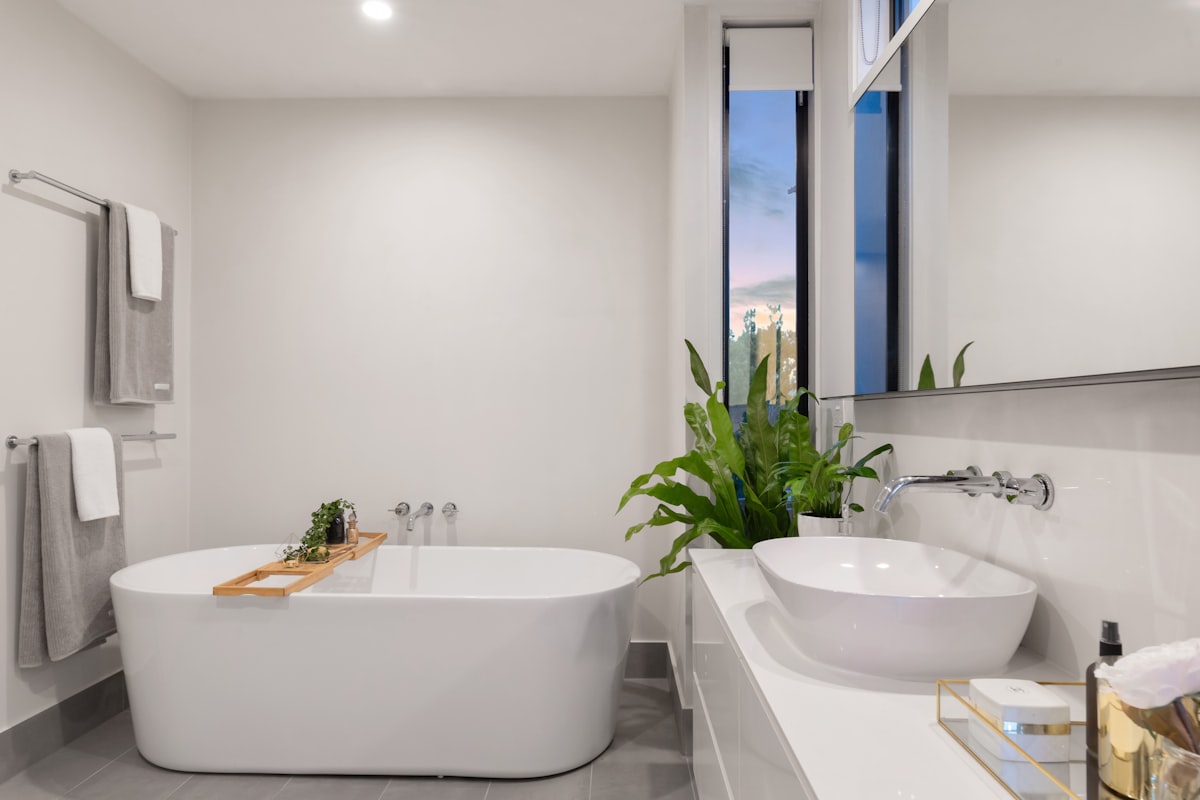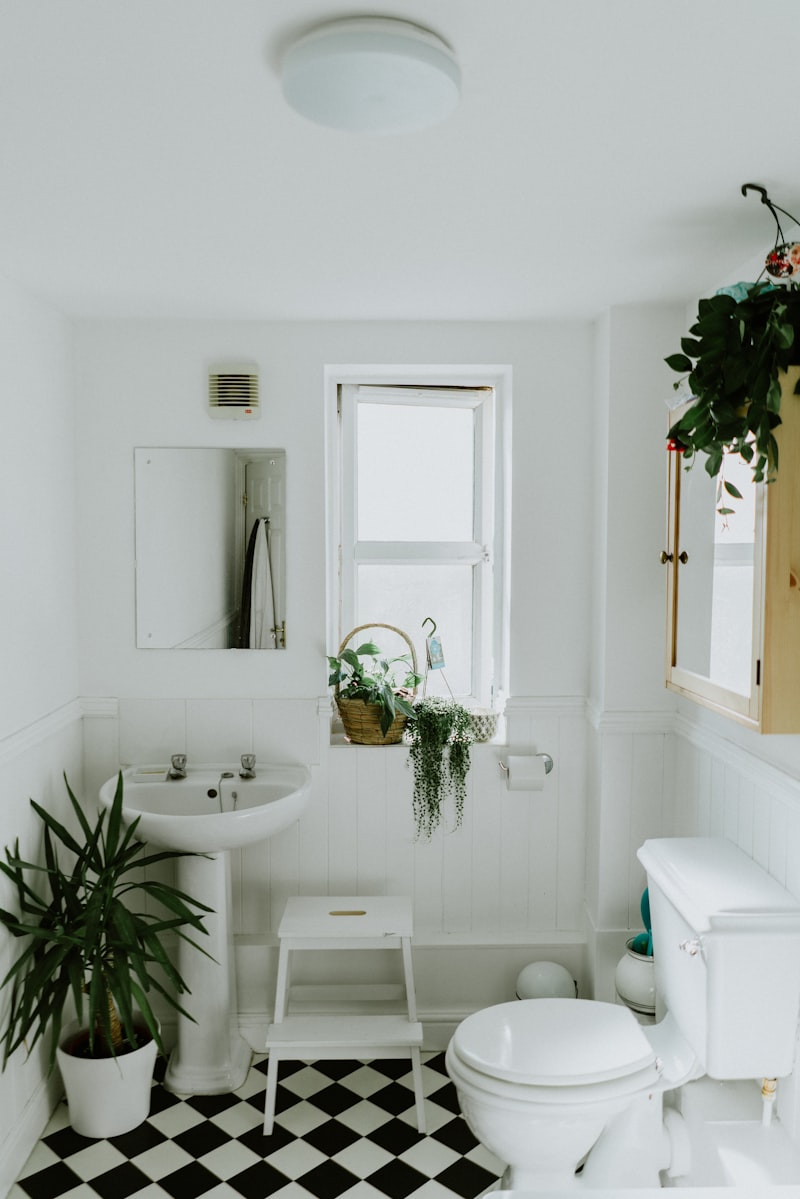
Your bathroom is probably poorly designed. And your body is compensating.
It seems obvious, but it is not: most bathrooms in Spain are designed around the plumbing, not the people. The heights of the vanity, the mirror, the shelves — everything is based on what was easiest to install, not what your body needs.
Think about it. How many times do you bend over too far to rinse your face? Does the mirror force you to lean in because you cannot see properly? Do you reach above your head to grab a towel? Does the toilet feel too low, making your knees protest every time you stand up?
If you answered yes to any of those questions, your bathroom has an ergonomics problem. It is not serious, but it is cumulative. You use the bathroom between 6 and 8 times a day, every day of the year. Every uncomfortable movement, repeated thousands of times, takes its toll.
The good news: bathroom ergonomics can be corrected. Sometimes with a full renovation, sometimes with adjustments you can make in a single morning. These 10 tips are based on the measurements from the Spanish Building Code (CTE), the UNE accessibility standard and what we have seen over years of working in flats in Valencia and the surrounding area — where bathrooms typically measure between 3.5 and 5.5 m2 and standard installation heights have not been reviewed since the 1980s.
1. Vanity height: 85-90 cm, not 80
The standard vanity installation height in Spain has been 80 cm from the floor to the upper edge for decades. That measurement comes from an era when the average population height was lower. Today, with an average height of 174 cm for men and 162 cm for women (INE data, 2023), the recommended ergonomic height is 85 to 90 cm.
What changes? A lot. At 80 cm, a person who is 175 cm tall leans forward about 15 degrees every time they wash their hands or face. Multiply that by 6-8 times a day, 365 days a year. Your lower back notices.
Recommendation: If you are renovating, install the vanity at 87-88 cm. It is the sweet spot that works for most heights. If there are users with very different needs (a tall adult and a child, for example), an adjustable pedestal basin or a wall-mounted unit with adaptable installation solves the problem.
Wall-mounted basins from Roca (the Inspira range, for example) allow you to choose the exact installation height. You are not limited to the factory standard.
2. Mirror: centre at 160 cm, and tilted if possible
A mirror placed too high forces you to stretch your neck. Too low, and you have to stoop. The ergonomic rule is simple: the centre of the mirror should be 160 cm from the floor. This works for people between 155 and 185 cm without forcing their posture.
But there is a better trick: mirrors with a 5-10 degree tilt (slightly angled downward) allow people of different heights to see themselves comfortably without moving their head. It is the system used by high-end hotels and it works extraordinarily well.
Another increasingly popular option: a full-length mirror (floor to ceiling or at least from 40 to 180 cm). It eliminates the height problem entirely and, as a bonus, visually enlarges the bathroom.
3. Shower controls: within reach WITHOUT stretching
Shower controls should be at a height of 100-110 cm from the floor and accessible from outside the direct water zone. Why? Because you need to be able to adjust the temperature before getting wet.
It sounds trivial, but in many bathrooms we renovate in Valencia — especially in flats built between 1970 and 1995 — the controls are at 120-130 cm (too high for shorter people or those seated) and within the water stream (you get wet before you can adjust).
The ideal ergonomic setup:
- Thermostatic mixer: at 100 cm from the floor.
- Hand shower: adjustable support between 90 and 190 cm (slide bar).
- Ceiling rain shower (if present): fixed at 200-210 cm.
The thermostatic mixer, besides being well positioned, maintains a constant temperature and has a safety stop at 38 degrees. It is ergonomics and safety in one element. Models from Grohe (Grohtherm range) are the benchmark in this field.
4. Toilet: 45-50 cm height, not the standard 40 cm
A conventional toilet has a seat height of 40 cm. And for many people — especially those over 50, with knee or hip problems or simply less flexibility — sitting down and standing up from 40 cm is uncomfortable. Sometimes painful.
Comfort height toilets (45-50 cm) have existed for years, but in Spain they have traditionally been associated with “bathrooms for elderly people.” That is a mistake. Comfort height is simply more ergonomic for most of the adult population. In the United States, for example, the ADA height (equivalent to our accessible standard) of 43-48 cm has been the best-selling option since 2019, including in homes with no accessibility requirement.
If you do not want to replace the toilet, a raised toilet seat of 5-10 cm costs between 30 and 60 euros and installs in two minutes. It is not the most elegant solution, but your body notices the difference from day one.
For more information on how to adapt the bathroom to your body, visit our guide on accessible bathrooms that don’t look like a hospital.
5. Storage at eye level: not on the floor, not on the ceiling
The rule is simple: what you use daily should be between 90 and 160 cm from the floor. No bending, no stretching, no climbing on anything.
In practice, this means:
- Mirror cabinet (medicine cabinet): centre at 150-160 cm. Medicines, creams, toothbrush.
- Shower niche: at 100-120 cm. Shower gel, shampoo, sponge.
- Vanity drawers: upper ones for daily items, lower ones for stock or cleaning products.
The most common mistake we see: high shelves (above 180 cm) that force you to stand on tiptoes. And low drawers (below 30 cm) that require you to bend down completely. Both are bad for your back.
You can see how we solve storage in real designs in our Organic Minimalist collection, where every element is designed for easy reach.
6. Distance between fixtures: the missing centimetres
The Spanish Building Code (CTE) establishes minimum distances between bathroom fixtures. But “minimum” is not “comfortable.” And in standard Valencia flats — with bathrooms of 3.5 to 4.5 m2 — those minimum distances are what get applied, because there is no more space.
Reference measurements:
| Distance | CTE minimum | Ergonomic recommendation |
|---|---|---|
| Front of toilet (clear space) | 60 cm | 75-80 cm |
| Side of toilet to wall | 20 cm | 30-35 cm |
| Front of vanity (clear space) | 60 cm | 70 cm |
| Clear passage between fixtures | 60 cm | 70-80 cm |
Is 20 cm between the toilet and the wall sufficient? Technically, yes. Is it comfortable? No. You hit your elbow every time you use the toilet paper.
When we renovate, we always try to gain those extra centimetres. Sometimes by switching from a floor-standing toilet to a wall-hung one (gaining depth), sometimes by reorienting the vanity position, sometimes by removing a bidet that is no longer used.
Use our budget calculator to see how much it would cost to redistribute your bathroom.
7. Door: it should open outward or be a sliding door
This tip saves lives. Literally.
If a person falls in the bathroom and ends up lying on the floor behind the door, and the door opens inward, it cannot be opened from outside. The body blocks the door.
Accessibility regulations require bathroom doors to open outward or be sliding doors. But in private homes it is not mandatory, so most bathrooms have the door opening inward — because it takes up less space in the hallway.
Our recommendation:
- Pocket sliding door: the best option if the wall allows it (there must be no installations in the partition). Saves space inside and out.
- External sliding door: installed on a visible track on the hallway wall. Easier to install but less elegant.
- Outward-opening hinged door: if the previous two are not feasible, simply reverse the opening direction.
And a detail many forget: the door should have a minimum clear width of 72 cm (ideally 80 cm). In older Valencia flats, bathroom doors often have a clear opening of 62-65 cm. This makes access with a walker or wheelchair difficult.
8. Zone lighting: not everything needs to be equally lit
A bathroom needs a minimum of 300 lux of general lighting (according to the CTE). But ergonomic lighting goes beyond the quantity of light.
Three zones, three needs
-
Mirror zone: the most demanding. Needs between 400 and 500 lux of diffused side light (not from above, which creates shadows under the eyes and nose). Side sconces or mirrors with perimeter LED are ideal.
-
Shower zone: 200-300 lux. Enough to see well, but not glaring. A recessed LED downlight with IP65 rating (water protected) is standard.
-
General zone: 150-200 lux. Softer, warmer. Creates ambiance without tiring the eyes.
Colour temperature
Another frequent mistake: mixing lights of different temperatures. The entire bathroom should be between 2,700K and 3,000K (warm white). Cold lights (4,000-5,000K) are harsh on the eye first thing in the morning and at night.
Night light
A floor-level LED strip (under the vanity or in the skirting board) with a motion sensor is one of the best inventions for the bathroom. It allows you to find your way at night without turning on the main light, avoiding glare (which makes it harder to fall back asleep) and falls in the dark.
For a complete guide on preventing nighttime falls, see our guide to preventing bathroom falls.
9. Towel rail: not where it looks good, but where you need it
The position of the towel rail is a perfect example of how aesthetics have dominated over ergonomics in bathroom design.
The key question is: can you reach the towel from inside the shower without having to step out? If the answer is no, the towel rail is in the wrong place.
Ergonomic measurements for the towel rail:
- Height: between 90 and 120 cm from the floor. Lower than that and you bend down while wet (slip risk); higher and you stretch a wet arm above your head (uncomfortable and drips down your elbow).
- Distance from the shower: maximum 60 cm from the edge of the shower zone. You should be able to extend your arm and reach the towel without taking a step.
- Towel rail next to the vanity: at the same height (90-120 cm) and no more than 40 cm from the side of the basin.
A well-placed towel rail is not just more comfortable: it reduces the water that falls on the floor outside the shower, and with it, the slip risk.
10. Ventilation and anti-fog mirror: the detail nobody plans
After a hot shower, the bathroom fills with steam. The mirror fogs up, surfaces become slippery and visibility drops. All of this is an ergonomic and safety problem.
Option 1: quality extractor
A bathroom extractor with a humidity sensor (not just a timer) activates automatically when humidity rises and turns off when it returns to normal. Brands like S&P (Soler & Palau, a Valencian company) have quiet models (25-30 dB) that you barely notice.
The minimum flow rate recommended by the CTE is 15 l/s for bathrooms with a shower. Many extractors installed in older homes do not reach 10 l/s.
Option 2: heated mirror (anti-fog)
An electrical resistance behind the mirror (anti-fog film) keeps the mirror surface warm and prevents condensation. It connects to the light switch or a separate switch. Film cost: 30-60 euros. Installation cost: included if done during the renovation.
Option 3: window (if there is one)
Natural ventilation is always better than mechanical. If your bathroom has a window, use it. But make sure the opening mechanism is accessible: a tilt-and-turn window at 120-140 cm from the floor is ideal. The high sliding windows (above 170 cm) found in many Valencia bathrooms are practically inaccessible for shorter people or those with reduced mobility.
The bathroom as a bodily experience: a change of perspective
Bathroom ergonomics is not a designer’s whim or a luxury for large bathrooms. It is common sense applied to the space you use most every day. A vanity 7 cm higher. A mirror 10 cm lower. A shower control you can reach without stretching. A toilet you can stand up from without effort.
Small changes, enormous cumulative effect. Your back, your knees and your daily comfort will be grateful for every well-considered centimetre.
If you are thinking about renovating your bathroom, take the opportunity to correct the measurements. It is the perfect moment, because adjusting a height during the works costs the same as leaving it wrong. The difference lies in knowing what to measure and what to ask for.
Calculate how much your ergonomic renovation would cost with our free calculator.
And if you are in Valencia and the surrounding area, let us talk. We have spent years measuring real bathrooms in real flats and we know exactly where the missing centimetres hurt.