The eternal question. And the answer is easier than you think
Shower or bathtub. Bathtub or shower. If you’re renovating the bathroom — or have simply been thinking about it for months — this decision can become an endless loop. There are thousands of opinions. Your brother-in-law tells you one thing, your mother another, and online you’ll find arguments for everything.
Look, let me be clear: there’s no universal answer. But there is an answer for your specific situation. And after reading this guide, you’ll have it.
No tricks here. We’re not going to sell you an expensive walk-in shower or convince you that you need a freestanding bathtub like the ones in magazines. We’re going to give you the data, the numbers, our experience from over 3,000 bathroom renovations in Valencia and surroundings, and let you decide.
Shall we begin?
When to choose a SHOWER (for 80% of people)
The truth is that for the vast majority of situations, the shower wins. Not because it’s prettier or more expensive, but because it adapts better to real life. Let’s go case by case.
Your bathroom is smaller than 6 m²
In flats in Valencia’s Ensanche district, with bathrooms of 4-5 m², the bathtub takes up 60% of the usable space. Think about it for a moment: more than half the bathroom dedicated to an element you actually use as a bathtub (filled with water, bubbles and everything) perhaps once a month. Or less.
An extra-flat shower tray or a flush-to-floor walk-in shower frees up centimetres you can use for a larger cabinet, a laundry basket or simply to stop banging your elbow on the wall every time you dry off.
There’s someone over 60 in the household
This point is non-negotiable. Falls in the bathroom are the number one cause of domestic accidents for people over 65 in Spain. Getting in and out of a bathtub requires lifting your leg to a height of 50-60 cm. With a wet floor. With soap on your feet.
A flush-to-floor shower with a non-slip tray, a grab bar and no step is, literally, a safety decision. If you want to go deeper, we have a specific guide on accessible bathrooms for elderly people.
It’s your main residence
If you live there every day, what you need is functionality. And functionality has a name: shower. You get in, shower for 7 minutes, get out. No manoeuvring, no waiting for it to fill, no cleaning a 1.7-metre-long surface afterwards.
Over the course of a year, a family of 3 using a shower instead of a bathtub saves between 30,000 and 50,000 litres of water, according to data from the INE. That translates to €150-€250 less on the water and gas bill. Read our detailed analysis in bathtub vs. shower: real water consumption.
It’s a flat for renting out
Tenants prefer showers. Full stop. There’s no debate. Property portals report that homes with a modern shower rent out 15% faster than those still with the original bathtub from the 80s. If your goal is profitability, the change pays for itself within months. Use our calculator to see the numbers for your case.
You prefer a contemporary look
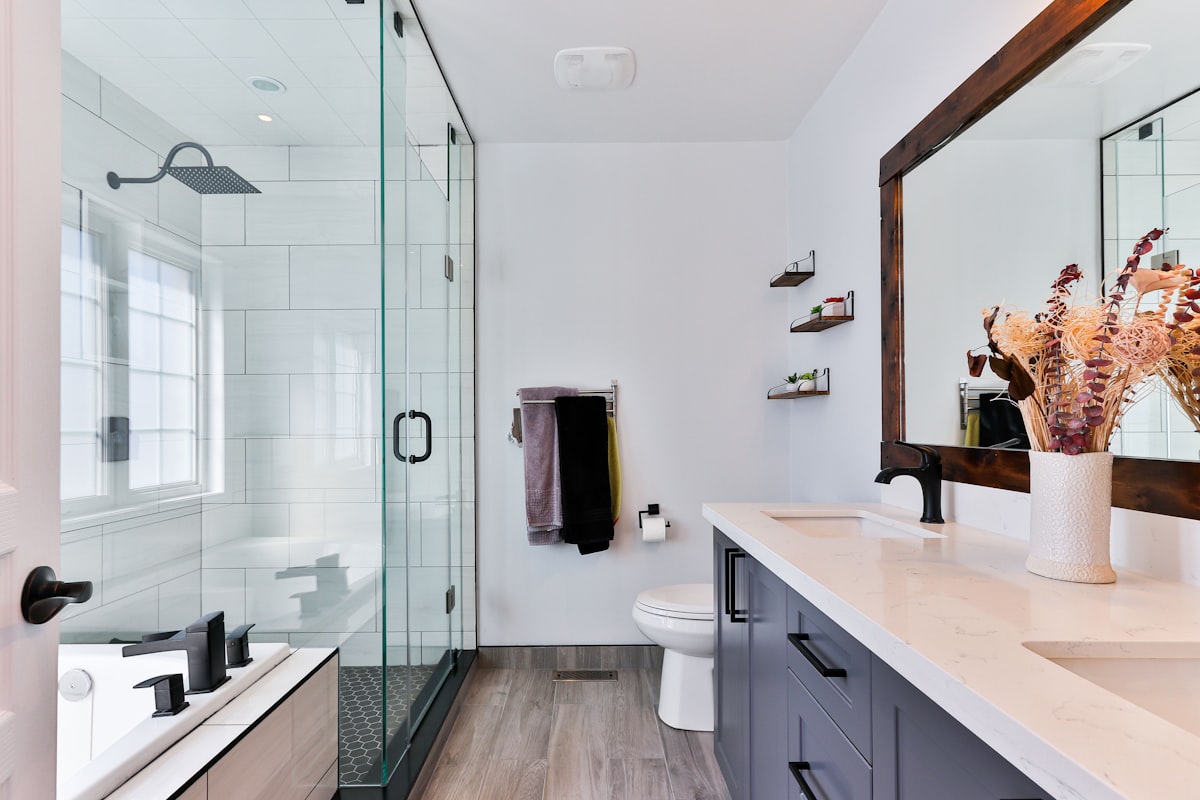
Bathroom trends have been clear for a decade: clean lines, glass, minimalism. A frameless fixed glass screen over a flush-to-floor shower tray is the look you see in every magazine and Instagram account. The white bathtub with a plastic curtain is the exact opposite.
When to choose a BATHTUB (the remaining 20%)
Having said all the above, there are situations where the bathtub not only makes sense, but is the best option. Few, but real.
Your bathroom is 8 m² or more and everything fits
If you have a large bathroom — genuinely large, not “large for Valencia” — you can consider having both a shower and a bathtub. In that case, the bathtub becomes an element of enjoyment, not necessity. You shower daily in the shower and have a relaxing bath when you feel like it. The best of both worlds.
You have small children (ages 0-5)
Here the bathtub wins hands down. Bathing a baby or a 2-3 year old in a shower is uncomfortable, slippery and frustrating. The bathtub is like a small pool for them, and for you it’s infinitely more comfortable. You can kneel beside it, have toys floating, control the temperature.
However, bear in mind that this stage lasts 4-5 years. If the baby is your main argument for keeping the bathtub, consider whether it’s worth conditioning the bathroom for the next 20 years for a need that lasts 5.
Therapeutic or medical need
There are people with muscular problems, arthritis, fibromyalgia or other conditions for whom a hot water immersion bath is part of their treatment. In these cases, the bathtub is a health tool, not a luxury. If that’s your situation, the decision is already made.
You want a freestanding bathtub as a design piece
A well-placed freestanding bathtub in a large bathroom can be spectacular. It’s an aesthetic statement. But you need at least 8-10 m² of bathroom, plumbing access in the centre of the room and a budget to match. It’s not for everyone, but when it works, it works.
The hybrid option: shower and bathtub
There’s a third way that many people don’t consider.
When it makes sense
- You have two bathrooms at home: shower in the main one, bathtub in the secondary
- Your bathroom is large (8 m²+) and both fit without cramping the space
- The layout allows placing a spacious shower (80x120 cm minimum) next to a bathtub without getting in each other’s way
Space requirements
To install both shower and bathtub in the same bathroom you need a minimum of 7-8 m². Below that, you’ll sacrifice comfort in both. And a bathroom where neither option works well is worse than one with only one done properly.
If you have two bathrooms, the ideal solution is simple: shower in the main one, bathtub in the secondary. This is the configuration that generates the most satisfaction among our clients.
Head-to-head comparison
| Aspect | Shower | Bathtub |
|---|---|---|
| Minimum space | From 70x70 cm | 170x70 cm minimum |
| Water consumption per use | 40-80 litres | 150-200 litres |
| Safety (falls) | High — floor-level access | Low — requires stepping over 50+ cm |
| Resale value | Highly valued by buyers | Neutral or negative (if only option) |
| Cleaning and maintenance | Quick, few joints | More surface area, perimeter sealing |
| Installation cost | €2,500-€7,500 | €3,000-€6,000 (standard) / €5,000-€12,000 (freestanding) |
| Daily usage time | 5-10 minutes | 20-30 minutes |
| Suitable for elderly | Yes, with adaptations | Not recommended |
| Suitable for children 0-5 | Uncomfortable for bathing them | Perfect |
| Contemporary aesthetics | Very high | Depends on the model |
Roca extra-flat resin shower trays and Grohe thermostatic systems are the combinations we install most. For bathtubs, Roca also has competitive options in both built-in and freestanding models.
What the data says
The numbers are quite revealing, and not just because we say so.
78% of bathroom renovations in Spain include the removal of the bathtub to replace it with a shower. This figure, reflecting the accumulated trend in recent years in the sector, is confirmed in reports from major renovation associations and sanitary equipment distributors.
In the property market, buyers prefer homes with a shower over a bathtub at a ratio of 3 to 1. Estate agents in Valencia confirm that a renovated bathroom with a modern shower can add between €3,000 and €8,000 to the perceived value of the property. If this angle interests you, we have an article on how bathroom renovation increases your home’s value.
Average water consumption in Spain stands at 133 litres per person per day (INE). Bathing and showering represent 30-35% of that consumption. Switching from bathtub to shower can cut that portion in half. We have the detailed figures in our article on real water consumption: bathtub vs. shower.
Our honest recommendation as Reformarte
After over 3,000 renovations, 85% of our clients who had a bathtub chose a shower. And none of them regretted it.
Does that mean the shower is always better? No. It means that for the majority of bathrooms we see — flats in Valencia, Torrent, Paterna, Burjassot, 4-6 m² bathrooms, normal families — the shower is the option that makes the most sense.
If your bathroom is large and you want the luxury of a freestanding bathtub as a design piece, go for it. If you have small children and only one bathroom, the bathtub makes perfect sense for a few years. But if your situation doesn’t fit those two cases, the shower will give you more comfort, more safety, less expense and a more attractive bathroom.
What we do ask is that you don’t make this decision based solely on aesthetics or what you’ve seen on Pinterest. Think about who lives at home, how the bathroom is actually used, how many square metres you have and what your 10-year plan looks like. Those are the factors that matter.
If you’d like us to help you decide with concrete data about your bathroom, you can take our bathroom quiz or ask us for a personalised quote. No obligation, no pressure.
Frequently asked questions
Will removing the bathtub lower my flat’s value?
Quite the opposite. In 2026, buyers value a modern shower more than an old bathtub. The only exception would be a luxury flat with a single bathroom where the buyer would expect to have both options. For 95% of homes in Valencia, removing the bathtub and fitting a good shower increases the perceived value. You can check figures in our guide on bathroom renovation and property value.
How much does it cost to replace the bathtub with a shower?
It depends on the level of finish. A basic option with an acrylic tray and sliding screen starts at around €2,500. A flush-to-floor shower with a fixed glass screen and thermostatic taps is around €5,000-€7,500. All inclusive: demolition, plumbing, materials and labour. Use our price calculator to get an estimate tailored to your case. You can also see the complete process in replacing bathtub with shower: price and process.
What if I have a bathtub and regret choosing a shower?
In our experience with over 2,500 bathtub-to-shower replacements, the regret rate is virtually zero. People who miss the bathtub tend to be those who used it frequently in reality (more than once a week). If that’s your situation, you might want to consider the hybrid option. But if you were using the bathtub as a shower 90% of the time, you won’t miss it.
Is it true that the bathtub uses much more water than a shower?
Yes, and the difference is significant. A bath uses between 150 and 200 litres of water. A 7-minute shower with a modern showerhead uses between 40 and 65 litres. Over a year, a family of three can save between 30,000 and 50,000 litres by switching from bathtub to shower. The full detail is in bathtub vs. shower: real water consumption.
Can I have both shower and bathtub in the same bathroom?
Yes, but you need space. The reasonable minimum is a 7-8 m² bathroom. Below that, you’ll have two cramped things instead of one comfortable one. If you have two bathrooms at home, the best solution is to divide them: shower in the main one, bathtub in the secondary. If you only have one and it’s small, choose one option and do it well. A well-designed bathroom with just a shower is infinitely better than a mediocre one with a cramped shower and bathtub.
Your bathroom, your decision
Don’t be swayed by trends, by what your neighbour did or by generic quotes. The best choice is the one that fits your real life: your space, your family, your daily use.
If you’re still not sure, take our free quiz and in 2 minutes we’ll give you a personalised recommendation. Or ask us for a no-obligation visit and we’ll see your bathroom in person.
What we will tell you, after years of renovating bathrooms in Valencia and surroundings: whatever your decision, make it with information. And this guide is a good starting point. You can also read 8 problems your bathtub is causing you and the 7 signs it’s time to replace your bathtub with a shower to help make up your mind.
Calculate your bathtub-to-shower swap price
Fixed price regardless of size