Choosing a toilet seems simple until you start researching
Floor-mounted or wall-hung. It seems like an aesthetic choice — one looks more modern, the other is the traditional option — but behind it lie implications for installation, price, maintenance and long-term daily life that most people don’t know about until it’s too late.
60% of our renovations now include a wall-hung toilet. Five years ago it was 30%. The trend is clear, but that doesn’t mean the wall-hung is the best option for every bathroom or every budget.
Here comes what nobody says: the wall-hung isn’t as perfect as it’s made out to be, and the floor-mounted isn’t as outdated as it seems. We’re going to tell you everything — the good, the bad and what your builder probably won’t explain because they couldn’t care less which one you choose.
If you’re in the middle of planning a renovation, our calculator gives you an estimated budget based on your sanitary ware choices.
Wall-hung toilet: everything you need to know
What it is and how it works
The wall-hung (or floating) toilet is anchored to the wall via a metal frame that’s installed recessed into the wall or with a stud wall. The cistern is hidden inside the wall, and the flush button is a plate on the surface. The bowl literally hangs in the air, with no contact with the floor.
Real price (complete)
This is where the information nobody gives you clearly begins:
- Wall-hung bowl: €120–400 (from a basic Roca model to a designer Duravit).
- Frame + concealed cistern: €150–350 (Geberit Duofix is the benchmark, €200–280; Roca Duplo, €150–220).
- Flush plate: €30–150 (basic chrome plastic around €40; glass or steel ones, €80–150).
- Installation: €200–400 in additional labour compared to a floor-mounted toilet (the frame needs mounting, the stud wall building, and concealed plumbing).
Total: €500–1,300 installed. Versus €250–600 for a complete floor-mounted toilet with installation. The real difference is €250–700.
Real advantages
Unobstructed floor cleaning: this is the number one advantage and the one with the most impact on daily life. There’s no base on the floor, no impossible corner behind the toilet. You run the mop underneath in one pass and you’re done. If you’ve ever tried cleaning behind a floor-mounted toilet — with the cistern hose, the anchor bolts and that corner where the floor never looks clean — you know what we’re talking about.
Modern, clean appearance: the wall-hung toilet gives a feeling of visual lightness. The continuous floor without interruptions makes the bathroom look bigger. Combined with large-format tiles and a wall-mounted vanity, the effect is hotel-like.
Adjustable height: the frame allows adjusting the bowl height between 40 and 48 cm. This is a detail most people don’t take advantage of but it makes a real difference: tall people who’ve always felt the toilet was too low, elderly people who need a higher seat to sit and stand with less effort. With a floor-mounted toilet, the height is fixed.
Sense of space: in small bathrooms (3–4 m²), seeing the continuous floor under the toilet creates a perception of spaciousness that improves the experience. The bathroom isn’t actually bigger — it just looks it.
Efficient dual flush: Geberit concealed cisterns feature the most reliable dual-flush system on the market. 3 and 6 litres (or 3 and 4.5 in eco models). They always work.
Real disadvantages
More complex and expensive installation: you can’t simply bolt a wall-hung toilet to the wall and call it done. You need a frame anchored to the floor and to a load-bearing wall (or a reinforced stud wall). If the wall behind the toilet is a thin single-brick partition of 4 cm, it needs reinforcing or a stud wall — which consumes 12–15 cm of depth.
The concealed cistern has its downside: when an external cistern breaks down, you open the lid, change the part and you’re done. When a concealed cistern has a problem, you access it through the flush plate opening — a 20x20 cm hole where you have to reach in blindly. Good brands (Geberit) are designed so everything is accessible through that opening, but it’s objectively more awkward than an exposed cistern.
Requires a solid wall: the frame anchors to a wall that supports the user’s weight (up to 400 kg dynamic load with a Geberit frame). That means solid brick, concrete or a specifically reinforced stud wall. On a lightweight partition without reinforcement, it can’t be installed.
The stud wall steals space: if the wall isn’t load-bearing and you need a stud wall, you lose 15–20 cm of depth in that area. In a 5 m² bathroom that’s manageable. In a 1.5 m² cloakroom, it can be a problem. That said, the top of the stud wall becomes a very useful shelf or ledge, so the space isn’t entirely lost.
Floor-mounted toilet: the classic that still makes sense
What it is and how it works
The traditional toilet. Base resting on the floor, fixed with bolts, connected behind or below to the drain. The cistern can be external (coupled to the bowl) or concealed in the wall (yes, floor-mounted toilets can also have concealed cisterns).
Real price (complete)
- Compact toilet with coupled cistern: €120–350 (Roca Victoria, €140–160; Roca The Gap, €250–350).
- Floor-mounted toilet with concealed cistern: €200–500 (bowl + cistern frame).
- Installation: €80–150 in labour.
Total: €250–600 installed with coupled cistern. With concealed cistern, €350–700.
Real advantages
Simple, affordable installation: a plumber installs a floor-mounted toilet in 1–2 hours. No frame needed, no stud wall, no load-bearing wall required. Bolt it to the floor, connect the drain and water supply, and it works.
Easy replacement: if in 10 years you want to change the toilet, you unbolt, disconnect, install the new one and in 2 hours it’s done. With a wall-hung, changing the bowl is equally easy, but if you need to touch the frame or cistern, things get complicated.
No structural requirements: it doesn’t matter if the wall is plasterboard, hollow brick or wood. The toilet goes on the floor. Any bathroom, any wall, any configuration.
Accessible cistern: with a coupled cistern, any repair is immediate. Open the lid, change the float or valve, close. No reaching through a 20 cm hole in the wall.
More options in the budget range: the range of floor-mounted toilets with good value for money is enormous. From the Roca Victoria at €140 (which has been Spain’s bestseller for decades for good reason) to premium options. In wall-hung models, the budget range is smaller and quality drops faster.
Real disadvantages
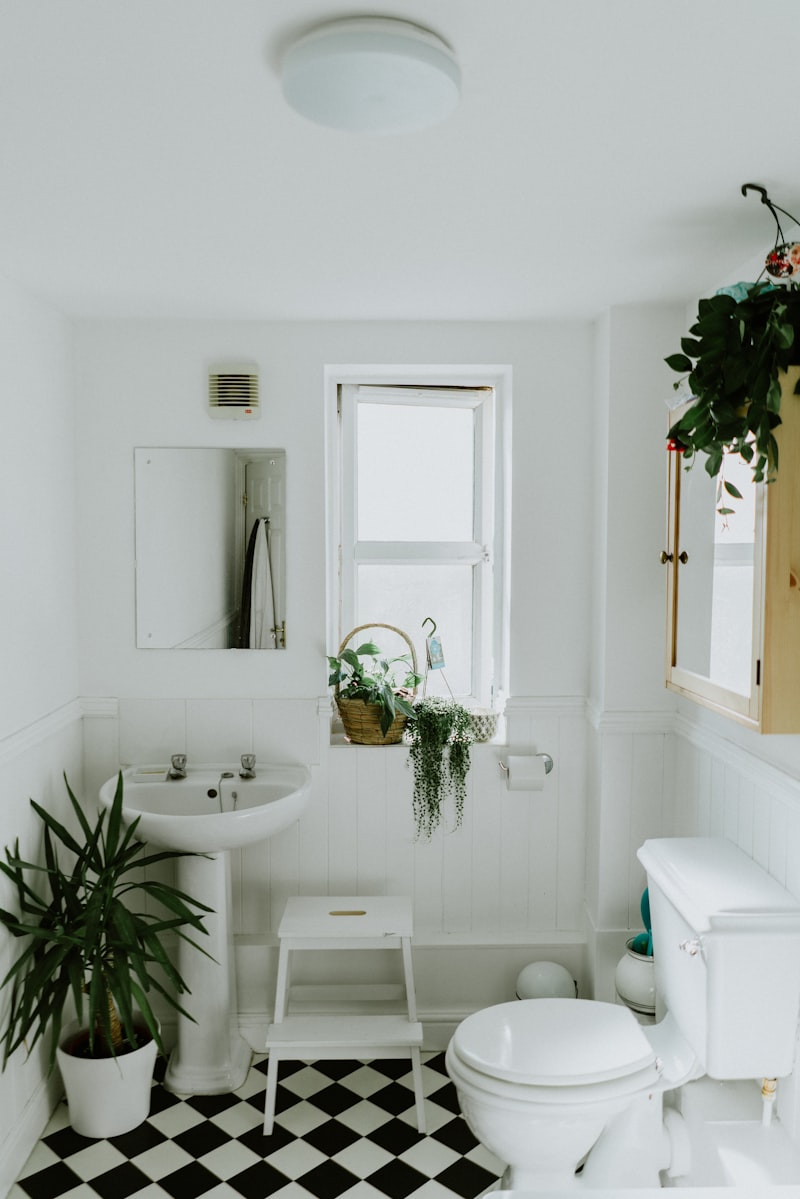
Problematic cleaning: that corner between the toilet base and the floor is a dirt magnet. The joints between the floor and the toilet base accumulate limescale, dust and… well, no need to be explicit. Models with a closed base (no nooks) improve the situation but don’t eliminate it.
Less contemporary look: let’s be realistic — in a new renovation, a floor-mounted toilet with coupled cistern looks visually outdated next to a wall-hung one. It’s not ugly, it just breaks the visual continuity of the bathroom. If you’ve invested in large-format porcelain, a wall-mounted vanity and a glass shower screen, the floor-mounted toilet looks out of place.
Fixed height: the bowl sits at whatever height it sits at (normally 40–42 cm). If you need more or less, your options are: put a plastic riser on top (not elegant) or accept it.
Takes up more visual space: the coupled cistern, the wide base, the visible hose behind — it all adds visual bulk that weighs heavily in small bathrooms.
Comparison table: point by point
| Criterion | Wall-hung | Floor-mounted |
|---|---|---|
| Total installed price | €500–1,300 | €250–600 |
| Installation labour | €200–400 | €80–150 |
| Installation time | 4–6 hours | 1–2 hours |
| Floor cleaning ease | Excellent | Difficult |
| Cistern access for repairs | Limited (flush plate opening) | Full (visible lid) |
| Wall requirement | Load-bearing or reinforced stud | None |
| Space it takes | 12–20 cm depth (stud wall) | No extra |
| Adjustable height | Yes (40–48 cm) | No (fixed ~40 cm) |
| Aesthetic appearance | Modern, clean | Classic, functional |
| Mechanism durability | 15–25 years (Geberit) | 10–15 years (standard cistern) |
| Future replacement | Bowl easy, frame complex | Very easy |
| Max weight supported | 400 kg (standard frame) | No practical limit |
The frames: Geberit is the gold standard
Here’s what nobody says and what makes the difference between a wall-hung toilet that works for 20 years without issues and one that causes problems at 3.
The frame is the metal structure that supports the cistern and anchors the bowl to the wall. There are many brands: Geberit, Roca, Grohe, OLI, Viega. But in the industry there’s a clear consensus: Geberit Duofix is the benchmark.
Why?
- Sigma cistern mechanism: the most reliable on the market. Internal parts (float, discharge valve, siphon gasket) are accessible through the flush plate opening without special tools.
- Spare parts availability: Geberit commits to 25 years of spare parts availability. That means if in 15 years you need to change the valve, you’ll find it.
- Universal compatibility: the Geberit frame accepts bowls from any brand (Roca, Duravit, Villeroy & Boch, etc.) as long as the anchor distance is standard (18 or 23 cm).
- Real warranty: 10-year warranty on all components. And the after-sales service actually works — we know because we’ve used it.
Can you install a frame from another brand? Yes, and Roca Duplo is a decent alternative at a lower price (€150–220 vs €200–280 for Geberit). But if you ask us, the €60–80 difference pays for itself in peace of mind over 20 years. It’s not the place to save money.
In which cases do we recommend each one?
Choose wall-hung if…
- You’re doing a full bathroom renovation (you’re already working on walls and plumbing).
- You have a load-bearing wall or are building a stud wall anyway.
- Easy cleaning is a priority (families with children, elderly people).
- You want a modern, cohesive aesthetic result.
- Your total budget exceeds €4,000–5,000 (the €300–700 wall-hung premium dilutes into the total).
Choose floor-mounted if…
- You’re only changing the toilet, without touching walls or plumbing.
- The wall behind the toilet is a lightweight partition that can’t bear load.
- Budget is tight and every €200 counts.
- You prefer easy cistern access in case of breakdowns.
- The bathroom is a secondary WC or utility room where aesthetics isn’t the priority.
The middle-ground option few people mention
There’s a third way: floor-mounted toilet with concealed cistern. You combine the installation ease of a floor toilet (no load-bearing frame) with the visual cleanliness of a hidden cistern. The floor still has the toilet base, but the cistern disappears. Intermediate price: €350–700. It’s a smart solution when you want to improve aesthetics but the wall can’t handle a wall-hung installation.
For more details on common mistakes when choosing sanitary ware, read our article about the 10 mistakes that ruin a bathroom renovation.
Long-term maintenance: what nobody tells you at the shop
Wall-hung
- Every 5–7 years: check the siphon gasket of the concealed cistern (a rubber part that seals the flush). Cost: €15–20 for the part, 30 minutes of work accessing through the flush plate opening.
- Every 10–15 years: possible replacement of the fill or discharge valve. Cost: €30–60 for the part.
- Never (if it’s Geberit): the metal frame doesn’t deteriorate. It’s made of galvanised steel with anti-corrosion protection. We’ve dismantled 18-year-old frames that looked brand new.
Floor-mounted
- Every 3–5 years: change the float or cistern valve. €8–15 for the part, 10 minutes of work.
- Every 8–12 years: possible full cistern mechanism replacement. Kit for €25–40.
- Constant cleaning: that silicone joint between the base and the floor needs checking every year. If it blackens or comes away, it needs renewing to prevent leaks and odours.
In both cases, the maintenance cost difference over 20 years is minimal. The difference lies in convenience: the floor-mounted is easier to repair, the wall-hung is easier to clean.
Check our guide on cheap vs expensive bathroom materials to understand where it’s worth investing more in sanitary ware.
Frequently asked questions
Can a wall-hung toilet support a 120 kg person?
Yes. Standard frames (Geberit Duofix, Roca Duplo) are certified for 400 kg static load. In normal use, the maximum dynamic load is around 150 kg. For people over 150 kg, there are specific reinforced frames (Geberit has models rated for up to 500 kg), although in practice the standard is more than sufficient for 99% of users.
Can you switch from a floor-mounted to a wall-hung toilet without a full renovation?
It’s possible but requires wall intervention: installing the frame, concealing the cistern and building a stud wall or false partition. That means retiling that area. If you only want to change the toilet without touching anything else, it’s more practical to stick with a floor-mounted one. If you’re renovating the entire bathroom, it’s the ideal time to switch to wall-hung.
What happens if the concealed cistern breaks down?
You access it through the flush plate opening (the hole where the plate sits). Geberit and Roca systems are designed so all internal parts (float, valve, gasket) can be removed and replaced through that opening without breaking the wall. An experienced plumber resolves most issues in 30–60 minutes.
Is the wall-hung toilet noisier?
It depends on the stud wall insulation. If the frame is installed directly against the wall without insulating material, the flush noise transmits through the wall and can be heard in adjacent rooms. The solution is placing a sheet of acoustic insulation between the frame and the wall. Cost: €20–40. Effect: a very noticeable reduction in noise.
How much space do I need behind the wall for a wall-hung toilet?
The standard Geberit Duofix frame is 12 cm deep. With the stud wall (plasterboard + tile), you need 15–18 cm total. If the wall is load-bearing and you can create a partial recess, you can reduce the space loss to 8–10 cm. An experienced installer knows how to optimise every centimetre.
The final decision isn’t just about aesthetics
Choosing between wall-hung and floor-mounted isn’t just a matter of taste. It’s a decision that affects the budget, the work required, daily cleaning for the next 15–20 years and ease of maintenance. There’s no universally better option — there’s a better option for your bathroom, your budget and your priorities.
At Reformarte we install both types. We don’t earn more from one than the other. We recommend what makes sense for your case, and if that’s a floor-mounted Roca Victoria at €140, we’ll tell you without hesitation. Our Organic Minimalist design includes a wall-hung, but there are renovations where a floor-mounted with concealed cistern performs equally well for less money.
If you want to see the options in person, request your no-obligation visit. We check your bathroom, measure the wall, verify if it can support a frame and give you an honest recommendation. If you’re in Valencia or the surrounding area, we’ll visit within 48 hours.