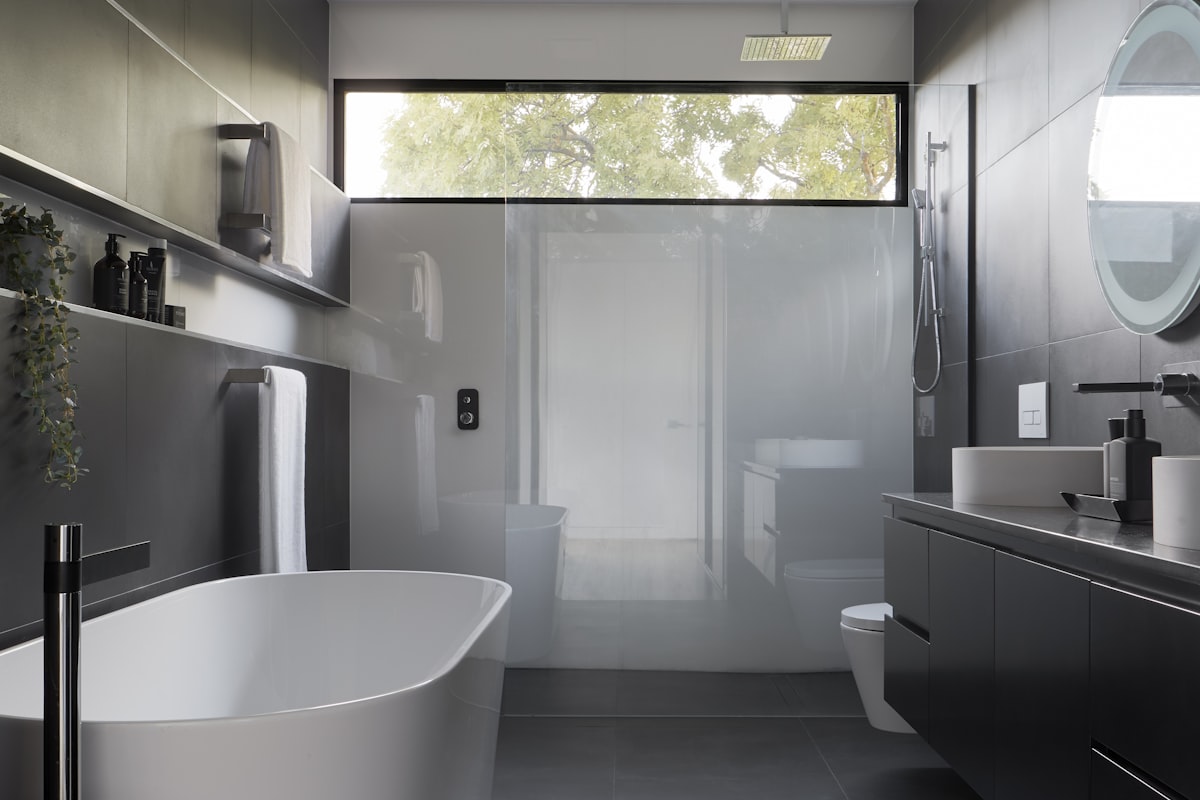
You’ve spent money renovating the bathroom. Now it’s time to look after it. And no, it’s not complicated.
You’ve just unwrapped a tempered glass shower screen that gleams like a shop window and a resin shower tray that looks like it came from a magazine. Three months pass. The screen has an impossible-to-remove whitish film. The tray has yellowish stains in the corners. And you think: “but I clean it every week.”
The problem usually isn’t cleaning frequency. It’s the method. Wrong products, aggressive techniques and, above all, Valencia’s hard water do more damage than the dirt itself.
Valencia’s water is among the hardest in Spain — 35–45 French degrees depending on the area and the time of year. That means every drop of water that evaporates on your shower screen leaves a mineral deposit. Multiply that by 365 days and you’ll understand where that white layer comes from that nothing seems to shift.
We’re going to explain exactly how to keep your shower looking like day one. Without expensive products, without hours on your knees scrubbing, and without ruining anything in the process.
The golden rule: squeegee after every shower
If you take away just one tip from this entire article, let it be this: run the squeegee over the shower screen after every shower. It takes 15 seconds. It’s the single most effective action against limescale.
Limescale deposits when water evaporates. If you remove the water before it evaporates, there’s no deposit. That simple. A €4–5 silicone squeegee saves you hours of cleaning per month and years of life for the screen.
Don’t overthink it: leave the squeegee hanging inside the shower (there are models with suction cups) and build the habit. Top to bottom across the glass, 15 seconds, done. If you live with someone who “never remembers” to use the squeegee, at least have the last person to shower do it. Once a day is better than never.
Weekly cleaning: what actually works
Once a week, spend 10 minutes cleaning the shower screen and tray thoroughly. You don’t need a battery of specialist products. Two basic things you already have in the kitchen will do.
For the glass shower screen
- Mix in a spray bottle: half water, half white cleaning vinegar.
- Spray over the entire glass surface.
- Leave for 3–5 minutes. Don’t scrub immediately — the vinegar needs time to dissolve the mineral deposits.
- Scrub with a soft sponge (never a metal scourer or the abrasive green side).
- Rinse with water and use the squeegee.
- Dry the aluminium profiles with a cloth — this is where the most limescale accumulates and where it looks worst.
If the screen has a factory anti-limescale treatment (like the EasyClean coating on many modern screens), the vinegar works even better because the treatment already repels some deposits.
For the resin shower tray
- Apply a little neutral soap (hand dishwashing liquid works perfectly) onto a wet soft sponge.
- Scrub in circles over the entire surface, focusing on the drain area and corners.
- Rinse well with water and make sure no soap residue remains (accumulated soap leaves a film that traps dirt).
- Dry with a cloth if you want it perfect, though it’s not essential.
Dishwashing liquid has a gentle degreasing power that removes body soap and shampoo residue without attacking the resin. It’s all you need for weekly cleaning.
For the ceramic or porcelain shower tray
Porcelain is tougher than resin, so it tolerates slightly stronger cleaners. But the routine is the same: neutral soap, soft sponge, rinse well. If it has grout joints, run an old toothbrush along them with a little bicarbonate of soda to prevent them greying.
Monthly deep clean: when limescale has already built up
Even if you squeegee every day and clean every week, once a month it’s worth doing a deep clean. The weekly vinegar keeps surface limescale at bay, but the more persistent deposits — especially on profiles, hinges and the track of sliding doors — need more attention.
Homemade anti-limescale formula that works
- 200 ml white cleaning vinegar
- 2 tablespoons bicarbonate of soda
- A few drops of dishwashing liquid
Mix in an open container (it fizzes at first, that’s normal). Apply with a sponge or cloth to the areas with the most limescale. Leave for 10–15 minutes. Scrub and rinse.
For the most stubborn areas — the bottom corners of the screen, the sliding door track, the shower head holes — soak a piece of kitchen paper in neat vinegar, place it over the calcified area and leave for 20–30 minutes. When you remove it, the limescale will have softened enough to wipe away with the sponge.
Specific cleaners: when they’re worthwhile
When the limescale is very severe or has been building up for months, specific bathroom anti-limescale products like those from Roca (they have a sanitaryware maintenance range) or brands like HG or Cillit Bang anti-limescale may be necessary. Use them following the manufacturer’s instructions and respecting the contact times — more time is not better, it’s worse.
If you’re going to use a commercial anti-limescale product, always test on an inconspicuous area first. Some contain strong acids that can damage certain finishes.
Products you must NEVER use (and why)
This is where many people go wrong. We assume that if something cleans a lot, it must be good. It doesn’t. These products clean, yes — but they also destroy.
On the glass shower screen
- Metal or abrasive scourers: they scratch the glass irreversibly. The micro-scratches become points where limescale grips harder. Result: more limescale, harder to clean, permanently opaque glass.
- Cleaners with abrasive particles (like Cif cream): same problem. The micro-particles scratch the surface.
- Concentrated ammonia: can damage aluminium profiles and silicone seals.
On the resin tray
- Bleach (sodium hypochlorite): bleach attacks resin. At first it seems to clean, but with repeated use the surface becomes porous and rough. Once the resin loses its protective layer, it traps dirt like a sponge. We’ve seen resin trays ruined in under a year from weekly bleach cleaning.
- Acetone or solvents: they dissolve resin. Literally break it down. Don’t even think about it.
- Hydrochloric acid: destroys the resin and can damage the metal drain fitting. Some people use it to “blast away limescale in one go.” It blasts away everything — including the tray surface.
On the natural stone tray
- Acids of any kind (vinegar included): natural stone (marble, travertine, limestone) reacts with acids and corrodes. The vinegar that is your best friend for glass is stone’s worst enemy. Use only neutral soap at pH 7.
- Generic anti-limescale products: most are acidic. Read the label.
Quick reference table: what to use on each surface
| Surface | Vinegar | Bicarbonate | Neutral soap | Bleach | Abrasives | Acids |
|---|---|---|---|---|---|---|
| Glass screen | Yes | Yes (diluted) | Yes | No | Never | With care |
| Resin | In moderation | Yes | Yes (ideal) | Never | Never | Never |
| Porcelain | Yes | Yes | Yes | Occasional | No | With care |
| Natural stone | Never | Gentle | Yes (only) | Never | Never | Never |
| Aluminium profiles | Yes (diluted) | Yes | Yes | No | No | No |
Valencia’s hard water: your particular enemy
Let’s talk about the elephant in the room. Or rather, the mineral in the water.
Valencia has some of the hardest water in Spain. Hardness is measured in French degrees (°fH): below 15 is soft, above 30 is very hard. Valencia city water, depending on the neighbourhood and supply source, ranges between 35 and 45 French degrees. That’s very hard water — the kind that leaves a white ring on everything it touches.
Limescale is primarily composed of calcium carbonate (CaCO3) and magnesium carbonate. When the water evaporates, these minerals remain deposited on the surface. On the shower screen they appear as a white film or drop-shaped marks. On the tray they feel like a rough texture.
Options to tackle limescale at its source
Besides regular cleaning, there are solutions that attack the problem at its origin:
Domestic water softener: installed at the property’s water inlet. Price: €600–1,200 for a typical home. Removes limescale from all the water in the house. It’s the most effective solution, but has maintenance costs (regeneration salt, around €50–80 per year). If you can afford it, it’s the best investment for maintaining not just the bathroom but all the plumbing.
Shower anti-limescale filter: screws between the water supply and the shower hose. Price: €20–40 plus filter replacements (€10–15 every 2–3 months). Partially reduces limescale (40–60%, depending on the filter). Not perfect, but you notice the difference.
Glass anti-limescale treatment: many new shower screens come with it from the factory. If yours doesn’t, you can apply a treatment afterwards. These are “nano-coating” type products that create a hydrophobic layer on the glass — water slides off instead of sitting. They last 6–12 months and cost €15–25 per bottle. Must be applied with the glass perfectly clean and dry.
The drain: the part everyone forgets
If your shower tray has a linear drain (an elongated grate instead of the classic round plughole), you need to clean it more frequently than you think. Hair, soap and limescale accumulate in the channel and end up smelling bad or draining slowly.
Every week: remove the grate (they’re usually lift-out) and remove accumulated hair. A couple of seconds.
Every month: take out the full grate and clean the inner channel with a brush and soap. Pour half a glass of bicarbonate followed by half a glass of vinegar down the drain. The fizzing reaction helps dissolve organic residue stuck to the pipe walls.
Every 6 months: dismantle the trap if accessible and clean the seals. If it smells bad and surface cleaning doesn’t fix it, the trap is blocked.
Silicone joints: the weak point
The silicone joints between the screen and the wall, between the tray and the wall, and between the profiles and the glass are where mould appears first. It’s normal: silicone is porous at a microscopic level and retains moisture.
Prevention: ventilate the bathroom after every shower. Open the window or run the extractor for 15–20 minutes. Stagnant humidity is what feeds mould.
Cleaning: if there are already black spots in the silicone, apply a paste of bicarbonate with a few drops of water. Spread it over the joint with your finger, leave for 30 minutes and scrub with an old toothbrush. For severe cases, a specific anti-mould product (like Cillit Bang anti-mould spray) applied carefully works well.
When to replace: if the silicone is black inside (the mould has penetrated the material), no amount of cleaning will help. It needs removing and fresh silicone applied. A plumber does this in 30 minutes. Always use fungicidal silicone (the kind that says “anti-mould” on the packaging).
Complete maintenance schedule
So you don’t have to think about it, here’s the summary calendar:
After every shower (15 seconds):
- Squeegee the screen
Every week (10 minutes):
- Clean glass with water + vinegar
- Clean tray with neutral soap
- Remove hair from drain
Every month (20 minutes):
- Deep anti-limescale clean (vinegar + bicarbonate)
- Clean profiles, hinges and tracks
- Bicarbonate + vinegar down the drain
- Check silicone joints
Every 6 months:
- Reapply anti-limescale treatment to glass (if you use it)
- Clean trap
- Check silicone condition and replace if needed
Every year:
- General shower inspection: does the screen close properly? Does the tray have cracks or scratches? Are the joints in good condition? If you spot something off, better to fix it before it gets worse.
Frequently asked questions
Can I use a steam cleaner on the shower screen?
Yes, steam cleaners are an excellent option for glass. The steam dissolves limescale without chemicals and doesn’t scratch. But don’t use them directly on silicone joints: excessive heat can degrade the silicone over time. If you want to go deeper into materials, our cheap vs expensive materials guide explains the real durability of each finish.
How often should you replace the shower screen?
A well-maintained tempered glass screen lasts 15–20 years without issues. What usually fails first are the rollers (on sliding screens) and the silicone joints. Both can be replaced without changing the entire screen. If the glass is scratched from abrasive cleaning, there’s no fix — the glass needs replacing.
Can a resin tray be repaired if it’s scratched?
Superficial scratches on resin trays can be disguised with a specific repair kit (resin paste in the same colour, applied and sanded). It costs €15–25 and works reasonably well for light scratches. For dents or cracks, it’s better to call a professional. More on tray types in our shower tray comparison.
What if my screen already has an impossible-to-remove limescale layer?
If vinegar and commercial anti-limescale products don’t work, the limescale has probably reacted with the glass surface (especially if it’s untreated glass that’s gone years without cleaning). A professional trick: apply citric acid powder dissolved in hot water (3 tablespoons per litre), leave for 30 minutes with soaked kitchen paper pressed to the glass. In 80% of cases it restores transparency. If that doesn’t work, the glass needs professional polishing or outright replacement.
Is it true that very hot water damages the shower screen?
Not the glass itself — tempered glass withstands up to 250°C. But very hot water generates more steam, which condenses more on the glass and leaves more limescale deposits. And hot steam also degrades silicone joints faster. That’s why showering at a moderate temperature (36–38°C) isn’t just better for your skin: it’s also better for your bathroom.
A bathroom that lasts is a bathroom that’s well looked after
Renovating a bathroom costs money — you already know that. What not everyone understands is that the investment doesn’t end on the day the work finishes. It never ends. A bathroom needs maintenance, just as a car needs oil.
The good news is that maintenance is simple, cheap and quick. A €5 squeegee, a €1 bottle of vinegar and 10 minutes a week. With that, your shower will look great for years.
If you’re thinking about renovating and want to choose materials that make long-term maintenance easier, browse our design catalogue — each proposal indicates what materials we use and why. And if you want a specific budget for your bathroom, our calculator gives you an estimate in 2 minutes.
Because a well-designed and well-maintained bathroom is one that makes your life easier. And that, at the end of the day, is what a good renovation is all about.
Calculate your bathtub-to-shower swap price
Fixed price regardless of size