Not everything expensive is better. And not everything cheap is bad.
The key is knowing where to spend and where not to. After years renovating bathrooms in Valencia, we’ve reached a conclusion many people struggle to accept: spending more doesn’t always mean getting a better bathroom. And conversely — there are things where cutting 50 euros today will cost you 500 tomorrow.
We’ve seen it a thousand times. Someone spends 120 euros per square metre on an Italian porcelain for the bathroom wall (which nobody will ever touch) and then fits a 40-euro tap that starts dripping after two years. Or the reverse: they buy the most expensive toilet in the shop and save on waterproofing. Three years later, damp on the downstairs neighbour’s ceiling. Let’s be practical.
This guide isn’t theory. It’s what we know after hundreds of renovations. If you’re already looking at numbers, our calculator gives you a personalised estimate in 2 minutes. But before entering figures, you need to understand where to put each euro.
Where it IS worth spending more
Here comes the good stuff. These are the items where it’s worth loosening the purse strings — not out of indulgence, but because the price difference is small compared to what you gain in durability and safety.
1. Shower tray: resin over acrylic
You’re going to step on the shower tray barefoot every day for 15-20 years. A basic acrylic tray costs between 90 and 150 euros. A mineral resin one (Roca Stonex type) costs between 140 and 220 euros. We’re talking about 30-50 euros more.
The practical difference:
- Acrylic: scratches easily, yellows over time, the non-slip surface wears out in 3-4 years.
- Resin: virtually indestructible, doesn’t yellow, maintains its non-slip finish for its entire lifespan.
At the building materials warehouse in Manises where we’ve been buying for years, they tell us straight: “80% of shower tray returns are acrylic.” We don’t need more data than that.
2. Taps: the thermostatic mixer is worth every penny
If we were forced to choose ONE single thing to spend more on, we’d choose taps without hesitation. A basic single-lever mixer costs 40-80 euros. A mid-range thermostatic costs around 150-250 euros. But listen:
- Real water savings: a thermostatic reaches the right temperature in seconds. A single-lever can have you adjusting for 30-40 seconds each time. That’s 6-10 litres per shower going down the drain. For a family of three, you could be wasting 8,000-10,000 litres a year — around 25-35 euros annually. The tap pays for itself.
- Safety: anti-scald stop at 38 degrees C. With children or elderly family members, that’s peace of mind.
- Durability: a cheap single-lever lasts 5-7 years. A Roca, Tres or Grohe thermostatic lasts 15+ years.
Read our Roca, Grohe and Tres tap comparison if you want to see specific models.
3. Floor: porcelain, without question
The bathroom floor is the surface that takes the most punishment. Water, bare feet, cleaning products, constant humidity.
- Ceramic (red body): 8-18 euros/m². Only suitable for walls. Wears quickly on floors and absorbs moisture.
- Standard porcelain: 18-40 euros/m². Water absorption below 0.5%, high hardness, Class C non-slip finish.
- Rectified porcelain: 30-55 euros/m². Same performance, thinner joints for a cleaner finish.
The difference between 15 euros/m² and 30 euros/m² on a 4 m² floor is 60 euros. Sixty. And those 60 euros are the difference between a floor that looks worn after 4 years and one that still looks new after 20. Our Organic Minimalist design is a perfect example of choosing smart flooring without blowing the budget.
4. Waterproofing: invisible but non-negotiable
The most misunderstood item. Properly waterproofing the shower zone costs 200-450 euros. Not doing it can cost you 2,000-4,000 euros in damp damage.
What we use: polyurethane liquid membrane across the entire wet zone up to 2 metres high, reinforced with waterproofing tape on corners and around the drain. Material cost: 80-120 euros. Labour: 2-3 hours. Low cost, prevents catastrophes.
More detail in our line-by-line budget breakdown.
Where you can save without any problems
And now the other side. These are the things where the affordable product performs just as well and spending more gives you no proportional benefit.
1. Wall tiles above waist height
The wall above 1.2 metres is a low-wear zone. Nobody touches it, it doesn’t get direct splashing. A ceramic tile at 12-18 euros/m² is perfectly adequate there compared to a 45 euros/m² porcelain. You save 100-150 euros in an average bathroom and nobody notices the difference. In the shower zone and on the floor, yes: go porcelain.
2. Toilet: the Roca Victoria and little else
The Roca Victoria costs 140-160 euros and has been Spain’s best seller for decades for a reason: it works. Dual flush 3/6 litres, quality porcelain, replacement parts at any hardware store. Any plumber in Valencia can install one with their eyes closed. Paying 300 euros more for a sleeker design? Only if design is your absolute priority. Functionally, it’s not worth it.
3. Bathroom mirror
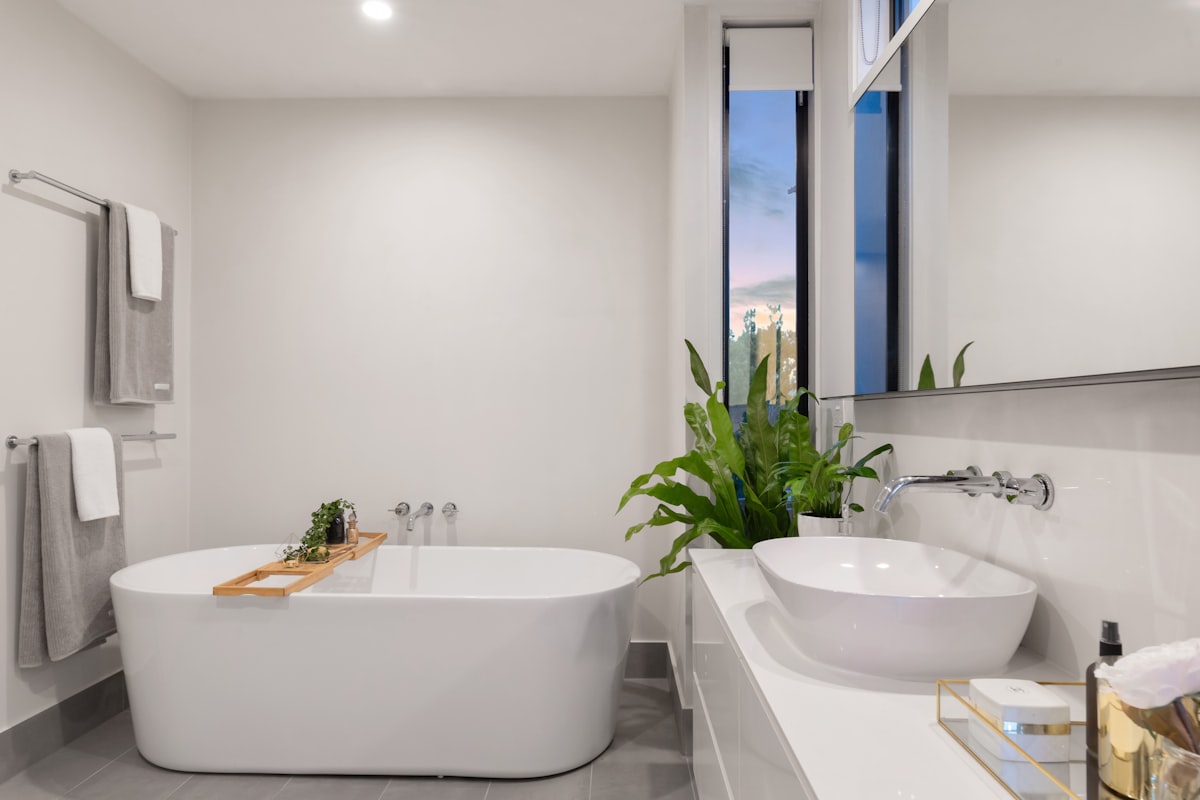
An IKEA or Leroy Merlin mirror with aluminium frame costs 25-40 euros. A “premium” bathroom brand mirror costs 150-300 euros. The difference is the name on the box. A round mirror with a black frame from Leroy Merlin at 45-70 euros looks fantastic.
4. Towel rails and accessories
Basic chrome towel rail: 15-25 euros. “Designer” version: 80-120 euros. Both do the same thing. Toilet roll holder, hooks, shower shelf — same story. The premium brand gives you no extra performance.
5. Paint
Any well-known brand anti-damp paint does the job. Titan, Bruguer, Tollens. A 750 ml tin costs 18-30 euros and covers the ceiling of a standard bathroom. There’s no need for the 40-euro-per-half-litre “specialist” paint.
Comparison table: item by item
| Item | Affordable option | Price | Premium option | Price | Recommendation |
|---|---|---|---|---|---|
| Shower tray | Basic acrylic | 90-150 € | Mineral resin | 140-220 € | Spend more — minimal difference, resin lasts three times longer |
| Shower tap | Basic single-lever | 40-80 € | Mid-range thermostatic | 150-250 € | Spend more — saves water, safer, pays for itself |
| Floor | Red-body ceramic | 8-18 €/m² | Standard porcelain | 18-40 €/m² | Spend more — 60 euros difference on 4 m² for 15 extra years of life |
| Waterproofing | Generic sheet | 120-180 € | PU membrane + tape | 250-450 € | Spend more — invisible but prevents disasters |
| Wall tile (dry zone) | 30x60 ceramic | 10-18 €/m² | Rectified porcelain | 35-55 €/m² | Save — low-wear zone, ceramic is sufficient |
| Toilet | Roca Victoria | 140-160 € | Roca The Gap / Meridian | 280-450 € | Save — the Victoria is indestructible with parts always available |
| Mirror | IKEA / Leroy Merlin | 25-70 € | Premium bathroom brand | 150-300 € | Save — a mirror is a mirror |
| Towel rails and accessories | Large retail store | 15-25 €/unit | Designer brand | 60-120 €/unit | Save — same function, same materials |
| Anti-damp paint | Titan / Bruguer | 18-25 €/tin | Premium specialist | 35-50 €/tin | Save — virtually identical result |
| Vanity unit | Basic kit (60 cm) | 150-300 € | Custom / branded | 500-1,200 € | Depends — if the bathroom is irregular, custom is worth it |
To see how these materials look combined, check out our design catalogue — each design specifies materials and price ranges.
The hybrid strategy: how we combine materials at Reformarte
We don’t buy everything premium and we don’t go for the cheapest across the board. In a typical renovation for a 4-5 m² bathroom, the distribution usually works out like this:
- 40-45% of the materials budget goes to floor, shower tray, taps and waterproofing.
- 25-30% goes to the vanity unit and shower screen.
- 25-30% goes to wall tiles, toilet, accessories and paint.
That distribution allows us to deliver complete bathrooms from around 3,000 euros without compromising quality where it matters. The trick isn’t spending little on everything — it’s spending smart.
Our Walk-In Invisible design is an example of intelligent material investment: large-format porcelain on the floor, acid-etched glass on the screen and concealed thermostatic tap. It’s not the cheapest, but every euro is where it should be.
If you’re still not sure how much budget you need, calculate your renovation here — we give you an estimate based on your bathroom size and the finish level you want.
Brand comparison: what each one offers
Tiles and porcelain
| Brand | Range | The good | The less good |
|---|---|---|---|
| Pamesa | mid-range (12-30 €/m²) | Unbeatable value. Castellon manufacturer, own production. | Premium-level exclusive finishes not available. |
| Vives Azulejos | mid-high (25-55 €/m²) | Designs with personality. Good range of industrial zellige and hydraulic. | Mid-to-high pricing. Some formats to order only. |
| Porcelanosa | premium (40-120 €/m²) | Spectacular finishes, XL formats, own shops. | Can double the cost compared to Pamesa. |
Our pick: Pamesa for dry-zone walls, Vives or Keraben for floor and shower area. Porcelanosa when the client wants large format or a very specific finish.
Taps
| Brand | Range | The good | The less good |
|---|---|---|---|
| Roca | mid-range (60-200 €) | Replacement parts always available. Solid value for money. | Low-end range with “plasticky” finishes. |
| Tres Griferia | mid-high (120-350 €) | Spanish manufacturer. High-durability cartridges. Current designs. | Less presence in large retail stores. |
| Grohe | premium (180-500 €) | Impeccable finish. EcoJoy technology. Reference thermostatics. | High price. Expensive replacement parts. |
Our pick: Roca for the basin, Tres or Grohe for the shower thermostatic.
Shower trays
| Brand | Range | The good | The less good |
|---|---|---|---|
| Docol / generic | affordable (80-140 €) | Low price. Immediate stock. | Gel-coat that wears. Short lifespan. |
| Roca (Stonex / Terran) | mid-range (140-250 €) | Mineral resin, Class 3 non-slip. 10-year warranty. | Some colours to order only. |
| Custom (Fiora, McBath) | premium (300-600 €) | Exact cut. Custom colours. | 4-6 week lead time. High price for standard bathrooms. |
Our pick: Roca Terran in 80% of the bathrooms we renovate. We only recommend custom trays when the dimensions don’t fit any standard format.
Frequently asked questions
Can you renovate a bathroom with cheap materials and have it look good?
Yes. The key is being selective. A bathroom with 25 euros/m² porcelain floor, 14 euros/m² ceramic walls, Roca Victoria toilet, Roca single-lever and resin tray looks perfectly fine and can cost between 3,000 and 4,500 euros with labour included. More on tile pricing in our tile cost guide.
Are own-brand products from big retailers worth it?
For accessories (towel rails, toilet roll holders, shelves), yes. For taps and fixtures, recognised brands (Roca, Tres, Grohe) have better after-sales service and parts availability. The own-brand tap works fine for two years, but when you need a replacement cartridge, it sometimes no longer exists.
How much can I save by mixing cheap and expensive materials?
In a 5 m² bathroom, the difference between all-premium and the hybrid strategy can be 1,500 to 2,500 euros. The visual result is very similar. If you want exact numbers for your case, use our calculator and compare the ranges.
Is it true that Spanish materials are worse than Italian?
No. The Castellon factories (Pamesa, Keraben, Tau, Vives) produce with the same technology as the Italians. Pamesa is the largest ceramic group in Europe by volume. The Italians have better marketing, but in technical performance, a mid-range Spanish porcelain competes head-to-head with an Italian one. We’re telling you this from experience — we’ve installed both.
Where should I NEVER cut corners?
Waterproofing and plumbing. Poor waterproofing causes damp that affects the structure. Mediocre plumbing causes leaks that ruin new materials. If you need to cut, cut on accessories, the mirror or the toilet model. Never on what goes behind the wall.
Your bathroom, your budget, your priorities
There’s no single right way to choose materials. Some people prefer to spend more on a beautiful toilet and less on taps. Others want the most expensive tile and don’t mind about the vanity. It’s all valid.
What isn’t valid is spending blindly. Knowing where each euro performs best is what distinguishes a smart renovation from an expensive one.
At Reformarte we work with a clear philosophy: maximum return per euro invested. We’re not going to sell you the most expensive material because it gives us a bigger margin. We recommend what your bathroom genuinely needs, at a price that makes sense.
If you’re thinking of renovating, request your no-obligation quote. We’ll prepare a proposal with specific materials, brands, models and prices. No surprises.
And if you’re in the Valencia area, even better — we’ll come to see the bathroom, measure up, have a chat and leave you a detailed quote within 48 hours.