Calpe and Altea are 8 kilometres apart but represent two completely different renovation markets. In Calpe: volume. Thousands of tourist apartments, many foreign owners, high renovation turnover. In Altea: exclusivity. Properties with singular architecture, higher-spending clients, superior finishing standards.
Working in both municipalities means understanding that difference.
Calpe: the town of foreign residents and the Peñón
Calpe is famous for the Peñón de Ifach, its salt lagoon, and for having one of the highest proportions of foreign residents in all of Spain. Over 50% of registered residents are of foreign origin — mainly German, British, Scandinavian, Belgian and Dutch. And that figure doesn’t count non-registered second-home owners.
The Calpe property market is fundamentally apartments and villas built between the 1970s and 2000s, oriented towards holiday use and second homes. Short-term rental is intense.
Owner profiles in Calpe
European second-home owners: bought 15–30 years ago, the property hasn’t had a serious renovation in some time, and now they want to bring it up to date. Communication is usually in English or German. Quality expectations are high but they know local market prices — many have spoken to several companies before contacting us.
Holiday rental investors: the Peñón de Ifach, the lagoon and the Levante and Arenal Bol beaches are a first-rate draw. A well-renovated apartment can command a good rental price. The renovation brief is the same as in Torrevieja or Benidorm: photogenic appearance, resistance to heavy use, easy cleaning.
Recent buyers: families or couples who have just bought in Calpe and want to renovate before moving in or before renting. They have the freshest ideas and tend to have researched materials and trends more thoroughly.
What we find in Calpe apartments
Most apartments we renovate in Calpe date from the 1970s–1990s, with bathrooms of 3–6 m² that in many cases haven’t had a serious renovation in decades. The most common typologies:
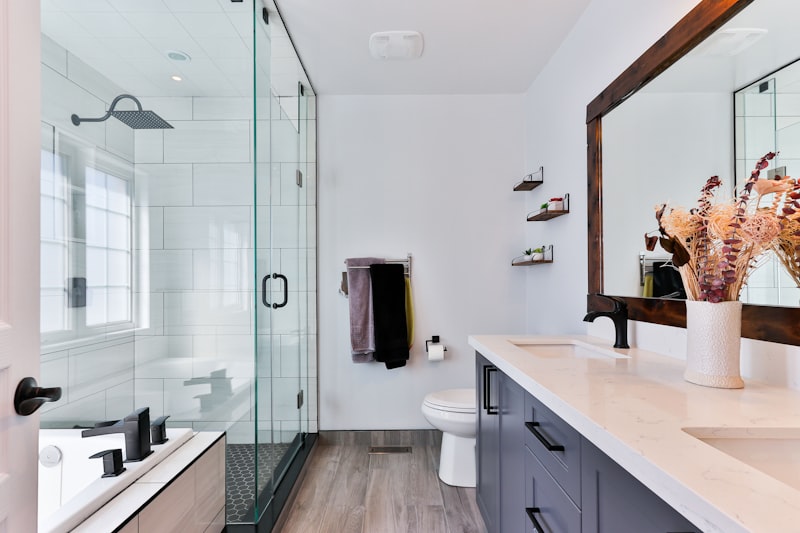
First-line apartments: the smallest, most sought-after for rental. Bathrooms of 3–4 m², often with a worn screen, period beige tiles, dripping taps. Our standard renovation brief: complete tile replacement (large format to visually enlarge the space), new shower tray, clear glass screen, mid-range tapware, LED lighting.
Inland apartment blocks: the urbanisations on the outskirts have slightly larger apartments (50–80 m²) with bathrooms of 4–6 m². Many are from the 1990s, with plumbing in better shape but outdated design.
Villas and detached houses: particularly in the Mascarat area and the elevated urbanisations north and south of town. Larger bathrooms, sometimes two bathrooms per property, with higher budgets available.
Hillside urbanisations: Calpe’s logistical challenge
Much of Calpe is built on sloping ground, with hillside urbanisations accessible via steep, narrow streets. The same applies to the Mascarat area and the urbanisations northward towards the Benissa boundary.
What this means for renovation:
Access for lorries or large vans can be impossible. Material delivery (tiles, sanitaryware, furniture) and rubble removal must be carefully planned. In some cases, the only access is on foot or with a hand trolley from where the vehicle can park.
That extra logistics cost is real, and reputable companies include it in the quote. If a quote doesn’t mention waste management costs or access difficulties, ask directly how these are accounted for.
Marine environment in Calpe: materials that last
Calpe is directly exposed to the Mediterranean. Sea breeze with its salt content affects everything outside, but also bathrooms with exterior windows or natural ventilation.
What fails first without the right materials:
- Chrome shower screen profiles: in a marine environment, chrome can show oxidation spots within 3–5 years. Anodised aluminium or stainless steel lasts far longer.
- Mirrors without perimeter sealing: the marine atmosphere accelerates edge delamination.
- Chrome zamak accessories (towel rail, roll holder): zinc alloy corrodes quickly in a marine environment. Stainless steel 304 or above is the right choice.
- Entry-level chrome tapware: the surface finish deteriorates faster. PVD or stainless steel tapware is the correct investment.
Altea: the other end of the market
If Calpe is volume and mass tourism, Altea is exclusivity and architecture. The white village of Altea, with its cobbled streets and whitewashed houses climbing up to the blue-domed church, is one of the most photographed and sought-after on the Costa Blanca.
The Altea property market differs from Calpe’s in several key ways:
Land and property prices: higher than in Calpe. Properties in the historic village and the elevated urbanisations with views are among the most expensive in the Marina Alta.
Owner profile: a mix of European artists and creatives established in Altea for decades, high-spending retirees (mainly Germans and Scandinavians), and younger high-income buyers looking for a quality second home.
Property type: terraced houses in the historic village (with their structural and access complications), villas with singular architecture in the elevated urbanisations, some more recent apartments in the beach area.
The bathroom in Altea: higher standards
In Altea, the bathroom renovations we are asked for tend to be at a higher finishing level than the Costa Blanca standard. It’s not an absolute rule, but the market has stronger demand for:
- High-end materials: natural stone, large-format porcelain (120×260 cm or similar), microcement, marble
- Design tapware: Hansgrohe Axor, Grohe Allure, Roca Inspira, or international brands such as Vola or THG Paris for the highest-budget properties
- Bespoke design: rather than choosing from a catalogue, many Altea clients work with an interior designer and we execute the project
- Design sanitaryware: Villeroy & Boch, Geberit Icon, Laufen, or integrated Japanese-style toilets as part of the design
Prices in Altea: for mid-to-high-end renovations, the range in Altea is €6,000–15,000 for a master bathroom of 6–10 m². For luxury interior design projects in villas, the price can comfortably exceed those ranges.
The historic village of Altea: a chapter of its own
Renovating in the historic village of Altea presents unique challenges in the area:
Mandatory on-foot access: the streets of the old town are stone staircases or lanes less than 2 metres wide. All material enters and exits by hand or with trolleys. Every trip takes time and human effort absent from a standard renovation.
Listed properties: many houses in the historic village are listed for their heritage value. There are restrictions on façade and communal element interventions. The interior can generally be renovated freely, but it’s worth consulting the Altea Town Hall before starting.
Old structure: stone or old brick walls, timber-beamed ceilings, original hydraulic tile floors. Bathrooms in these houses tend to be small with non-standard configurations. They require more adaptation work and more technical experience than a modern flat.
The additional cost for access difficulties and old structure in the Altea historic village can be 20–30% more than the same renovation in a property with normal access.
Comparative prices: Calpe vs. Altea
| Type of renovation | Calpe | Altea |
|---|---|---|
| Partial improvements | €700–2,000 | €900–2,500 |
| Basic full renovation (4–6 m²) | €3,500–5,500 | €4,500–7,000 |
| Standard full renovation (5–8 m²) | €4,500–7,000 | €6,000–10,000 |
| Renovation with premium materials | €7,000–12,000 | €9,000–18,000 |
| Surcharge historic village / difficult access | +10–20% | +20–30% |
Prices include materials, labour and waste management. 10% VAT where applicable.
Frequently asked questions
Do you work in both Calpe and Altea? Yes, we work throughout the Marina Alta: Calpe, Altea, Dénia, Jávea, Moraira, Benissa and nearby municipalities. We offer a free on-site estimate across the whole area.
How do you manage communication with foreign property owners? In English and German. We have experience with clients who manage the renovation from their home country. The process includes periodic photo reports, WhatsApp communication and digital invoicing. The key is coordinated with the neighbour, the concierge or a local property management company.
Is it worth investing in premium materials for a holiday rental apartment in Calpe? It depends on the rental segment. For low-price-per-week rentals, no. For mid-to-high-quality rentals (the fastest-growing segment in the area), a good-quality shower, quality tapware and proper photography do improve occupancy and nightly rates. Our bathroom renovation ROI guide for rentals helps you run the numbers.
Do I need planning permission to renovate in the historic village of Altea? For interior works not affecting the structure or façade, a major building permit is generally not required. If the property is listed, specific conditions may apply. Consult the Altea Town Hall (Urbanisme department) before beginning any work.
Have a property in Calpe or Altea and want to assess the renovation? Request a quote in our calculator and we’ll arrange a no-obligation site visit.