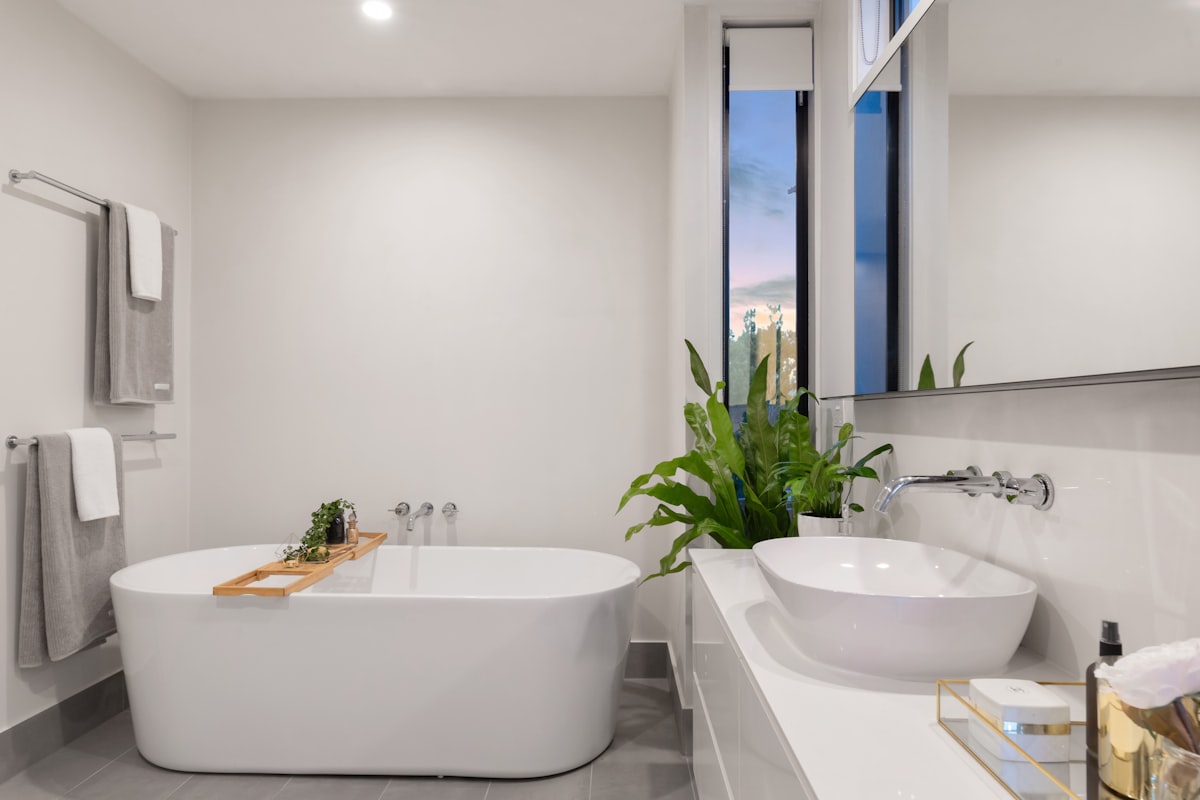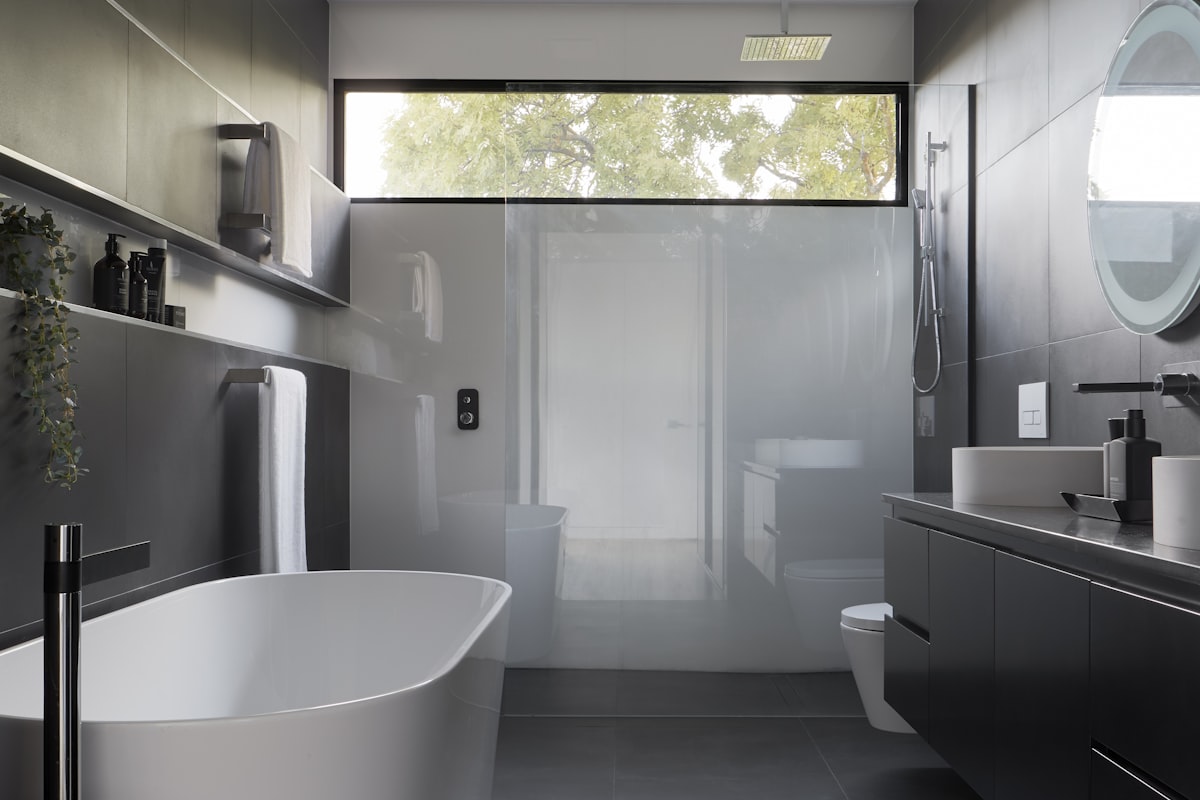
The built-in shower sells well on Instagram. Continuous floor, no edges, a discreet linear drain at the wall, microcement or large-format porcelain. It looks great in photos. But there are things photos don’t show: what happens when the slope is wrong, what it actually costs to do it well, or what it means to maintain the grout joints of a tiled floor in a wet zone.
And the prefabricated tray has unjustified bad press. Many people associate it with cheap renovations from the 1990s, but current resin, low-profile ceramic or natural stone trays have a quality and appearance that has nothing to do with that era.
Let’s compare both options honestly.
What is a built-in shower
A built-in shower is a shower floor constructed on-site. There’s no prefabricated tray: the plumber or builder creates the base with mortar, creates the slope towards the drain (at least 2% fall per metre), places a waterproofing membrane, and tiles over it with the chosen material.
The result is a continuous floor, without the tray edge, at the same level as the rest of the bathroom or with minimal recess. Visually, it’s the most integrated option available.
What is a prefabricated shower tray
It’s an industrial piece manufactured in a factory with the slope already built in. The most common materials are resin, acrylic, ceramic, natural stone (Stonex or similar) and slate. The tray has an integrated drain and is ready to be placed with adhesive mortar on the prepared base.
The most popular format currently in bathroom renovations in Valencia is the extra-flat resin or Stonex tray, 2.5-4 cm in height, with a matte or textured non-slip finish. It sits almost level with the bathroom floor and visually is difficult to distinguish from a well-executed built shower.
Cost differences: there’s a surprise here
The built shower seems more expensive because it requires more labour, but the difference compared to a quality tray is not as large as many people think. And if you compare it with a budget tray, the built version comes out significantly more expensive.
| Option | Material cost | Labour | Approx. total |
|---|---|---|---|
| Basic acrylic tray (60x90) | €80-150 | €100-150 | €200-300 |
| Flat resin tray (80x120) | €250-450 | €120-180 | €370-630 |
| Stonex or natural stone tray | €400-700 | €150-200 | €550-900 |
| Built shower with tiles | €200-400 (material) | €400-700 | €600-1,100 |
| Built shower with microcement | €300-500 (material) | €500-900 | €800-1,400 |
| Built shower with large-format porcelain | €350-600 | €500-800 | €850-1,400 |
The built shower is more expensive in labour because it requires more phases: base preparation, waterproofing, slope mortar, tiling, grouting. And if something goes wrong (incorrect slope, inadequate waterproofing), the repair cost is high.
The main problem with built showers: the slope
This is the mistake we see most frequently. The slope of the floor towards the drain is what makes water run off properly. If it’s poorly executed, water pools at some point on the floor. It seems like a minor problem but it isn’t: standing water deteriorates the grout, encourages mould, and is uncomfortable daily.
The minimum recommended slope is 2% per metre (2 cm fall per linear metre). For an 80x80 cm tray, that’s 1.6 cm of fall towards the drain. It sounds little, but executing it correctly across the entire surface requires precision.
Prefabricated trays have the slope built in from the factory. Always correct. In a built shower, it depends on the craftsman executing it.
Grout joint maintenance
In a tiled built shower, there are joints. And in a wet zone, joints are the weak point. Conventional grout stains, accumulates limescale and can develop mould. It needs regular cleaning and renewal every few years.
Two solutions to minimise this problem:
- Reduce the number of joints: using large-format porcelain (60x120 cm or larger), joints are more spaced out. Fewer joints, less maintenance surface.
- Using continuous materials: microcement or resin applied directly virtually eliminates floor joints, though it requires very careful application for waterproofing.
Resin or Stonex trays have no surface joints. They’re a single piece. The only joint is the meeting with the wall, sealed with silicone, which needs renewing every 3-5 years.
Execution time
This is a factor many clients don’t account for when planning the renovation.
A prefabricated shower tray can be installed in a day. If the plumber already has the base prepared, it can be in use the next afternoon.
A built shower requires several days:
- Day 1: base preparation and slope mortar
- Day 2-3: mortar drying (minimum 24-48h before tiling)
- Day 3-4: waterproofing and tiling
- Day 4-5: drying and grouting
- Day 5-6: final sealing with silicone
In total, a well-executed built shower needs between 4 and 7 days of actual work. If the complete bathroom renovation takes 10-15 days, the built shower extends the process significantly.
When to choose a prefabricated shower tray
- Tight budget
- Fast renovation (waiting tenant, only bathroom in the house)
- You want guaranteed slope and watertightness
- Small bathroom where visual differences are less noticeable
- You don’t want to worry about grout joint maintenance
When to choose a built shower
- Full renovation of the main bathroom with no budget restrictions
- You want a specific design that a prefab tray can’t offer (irregular shape, wall-mounted linear drain, total floor integration)
- Large bathroom where visual effect matters
- You have time for execution (and trust the installer completely)
Frequently asked questions
Can I apply microcement over an existing shower tray? Not recommended. Microcement needs a rigid, well-adhered base. The tray surface, especially if it’s acrylic, doesn’t offer sufficient adhesion. The usual approach is to remove the tray and build the shower from scratch.
Is a flat shower tray visually the same as a built shower? Almost. A 3cm matte resin tray, well sealed with silicone and with a good drain, looks very good. The difference is that the tray has a visible edge, even if minimal. In a floor-level built shower, the transition is completely continuous.
How long does a well-executed built shower last? If properly waterproofed and the grout is maintained in good condition, it can last 20-30 years without problems. The critical point is the initial waterproofing. If it fails, water penetrates the structure and the damage can be serious.
To see how the shower fits into your total renovation budget, use our bathroom renovation calculator. And if you’re considering changing your bathtub for a shower, read our article on changing bathtub to shower: price and process before deciding.
Calculate your bathtub-to-shower swap price
Fixed price regardless of size