Come back from a hotel with a spa and your first thought is: I want that in my own bathroom. And you can have it. A whirlpool bath at home turns a quick evening shower into something else entirely. But before you order one, it pays to know what you’re letting yourself in for: they’re not all the same, they don’t all cost the same to run, and the upkeep makes the difference between a luxury you enjoy for ten years and an oversized bath you end up hiding behind a curtain.
Here’s the honest version — no sales pitch. Types, what it costs to maintain them, and what they actually use in water and electricity.
What is a whirlpool bath at home and what types are there?
A whirlpool bath at home is, at its core, a standard bath fitted with a system that drives water or air through jets under pressure. That’s what gives you the massage. From there, things split into three families, and choosing the right one is the decision that will affect you most down the line.
Water jets (water-jet system)
The jets push water through at pressure. This gives the most powerful massage — the kind you actually feel in your back and lower spine. The downside: water stays sitting in the internal pipework once you drain the bath. If it isn’t purged properly, that’s where biofilm forms. So it needs more attention.
Air jets (air-jet system)
Instead of water, this injects warm air bubbles. The sensation is gentler — like champagne, enveloping but less intense. The big advantage is hygiene: because air circulates through the channels rather than standing water, the system stays much cleaner. If relaxation is more your thing than a therapeutic workout, this is the one for you.
Combined system (water + air)
You get both: water jets for the powerful massage and air diffusers for the bubbles. It’s the most complete option and, predictably, the most expensive to buy and to maintain. It makes sense if you’ll actually use it, not just as something that looks impressive.
| Type | Sensation | Maintenance | Indicative price |
|---|---|---|---|
| Water (water-jet) | Powerful massage | High (purge after each use) | €700 – €2,500 |
| Air (air-jet) | Gentle bubbles | Low | €900 – €3,000 |
| Combined | Massage + bubbles | High | €1,500 – €4,500 |
These are bath-only prices. Installation is on top of that and varies considerably depending on your bathroom: it requires a dedicated electrical circuit with its own RCD (residual current device), reinforced drainage, and sometimes an access panel to reach the motor.
Maintenance: where most people come unstuck
Here’s what the showroom won’t tell you. A whirlpool bath is not like a regular bath you wipe down with a cloth. It has an internal circuit, and that circuit needs looking after.
With water-jet models, the water left sitting in the pipework after you drain the bath is the perfect breeding ground. That’s why many models include an auto-drain or purge function: you activate it, it expels the residual water, and that’s that. If yours doesn’t have one, you’ll need to run a dedicated disinfectant through the jets with the bath full, at regular intervals.
Our honest view, after fitting quite a few of these: if you’re not prepared to do that maintenance, don’t buy a water-jet model. Get an air-jet model or, frankly, a standard bath. We’ve seen too many whirlpool baths end up being used as ordinary baths because the owner never purged the circuits and eventually the jets started to smell. A real waste of money.
Everything else is straightforward: clean the surface without abrasive scourers to avoid scratching the acrylic, check the perimeter silicone seal, and give the motor a once-over once a year. That’s about it.
Real running costs: water and electricity
Now for the numbers — the part that actually matters.
Water. A domestic whirlpool bath typically holds between 200 and 300 litres, compared with 60–80 litres for a five-minute shower. That’s a significant difference, and it’s your main running cost. For context, the average water consumption per person per day in Spain is around 133 litres according to INE (Spain’s National Statistics Institute). A single whirlpool bath can use almost two days’ worth of water in one go. It’s not something you’d want to use every day without thinking.
Electricity. The good news here. The motor that drives the jets uses between 0.8 and 1.5 kW while it’s running. For a 20-minute soak, that’s roughly 0.3–0.5 kWh — pence, essentially. The real energy cost isn’t the massage system at all: it’s heating those 250 litres of water. If your hot water is electric, that’s where your bill goes; if it’s gas-powered, considerably less.
| Item | Per bath (approx.) |
|---|---|
| Water | 200 – 300 litres |
| Motor electricity | 0.3 – 0.5 kWh |
| Main energy cost | Heating the water |
In practical terms: the whirlpool system itself uses very little electricity. The cost is in the water and heating it. If you have solar panels or a gas boiler, the cost per bath is perfectly reasonable. If not, treat it for what it is: a weekend treat, not a daily routine. For a broader picture of water use in the bathroom, our article on bath vs shower water use gives you real figures that might surprise you.
Whirlpool bath or creating a spa feel another way?
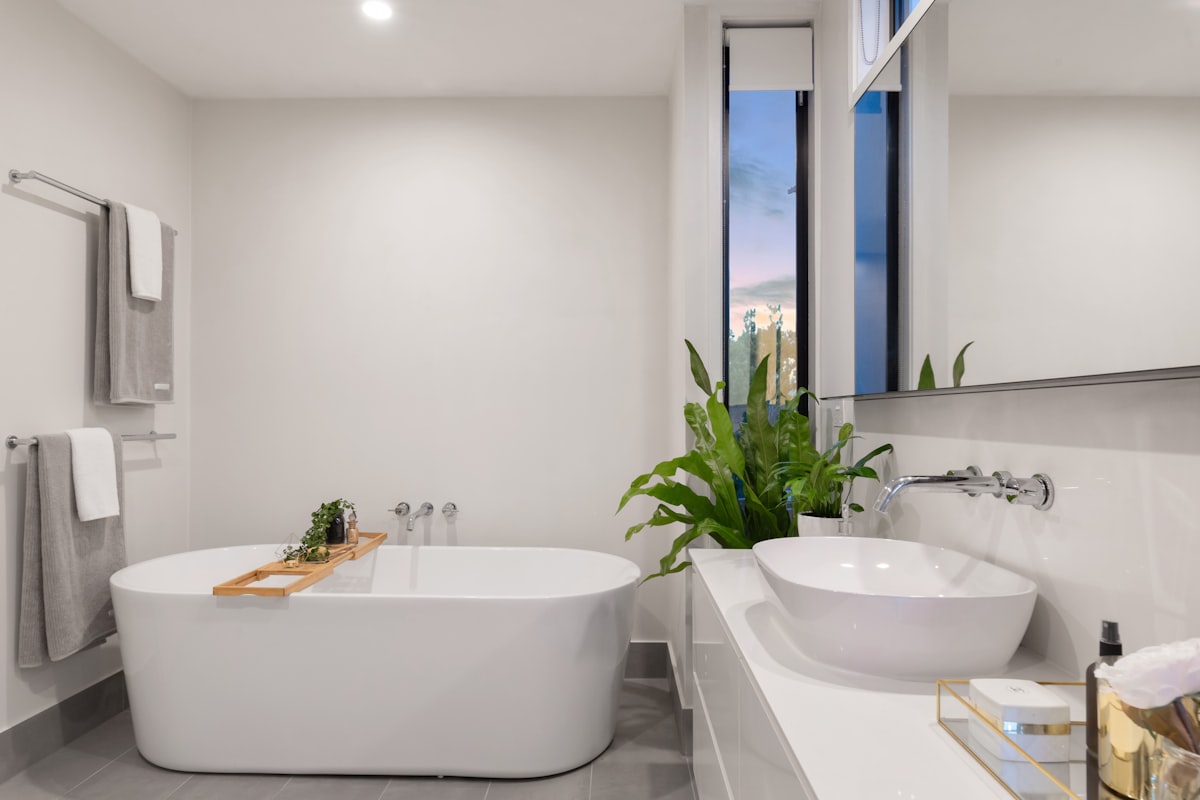
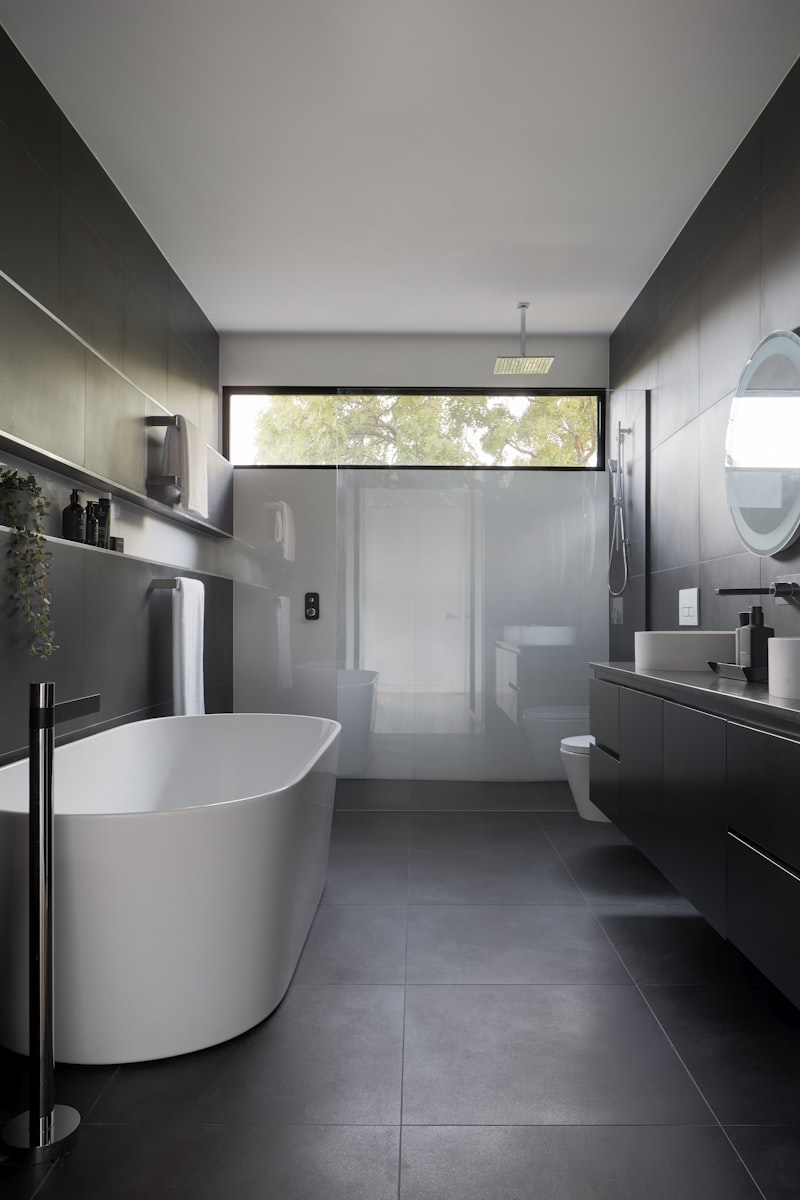
Not everyone needs jets. Sometimes what you’re really after is a sense of calm, and there are several ways to get there. A well-placed freestanding bath with good lighting and quality materials already creates a feeling of quiet luxury — no motor required. And if you’re looking for inspiration beyond the bathroom you already know, our guide to hotel-style bathrooms at home shows how that spa atmosphere is mostly about proportion and materials, not necessarily about jets.
In Valencia we see whirlpool baths most often in detached house renovations out towards La Eliana, or in large-footprint penthouses in the Eixample: there’s space for them, and the difference in experience is real. In a smaller bathroom, on the other hand, it usually means cramming an elephant into a phone box.
Brands such as Roca offer whirlpool bath ranges designed for residential use rather than for hotel spas — those are the ones that actually fit in a normal flat and make practical sense.
Frequently asked questions
Does a whirlpool bath at home use a lot of electricity?
The motor uses very little: roughly 0.3–0.5 kWh per bath, which amounts to pennies. What really drives up the bill is heating 200–300 litres of water, especially if your hot water system is electric.
How much does it cost to maintain a whirlpool bath?
If you buy a model with an auto-purge function and keep on top of it, almost nothing: an occasional specialist disinfectant and normal surface cleaning. The real cost is time and consistency, not money.
Will one fit in a small bathroom?
They come as small as 140 cm, so physically, yes. But in a bathroom under 5 m², it tends to fill the entire space and feel oppressive. In a compact bathroom, it’s worth exploring other wellness options first.
Is it hygienic if I clean it properly?
Yes. Air-jet models are the easiest to keep clean because they don’t retain standing water. Water-jet models need the circuits purging; done properly, there’s no issue. Left undone, you’ll get odours and bacterial build-up.
Do I need special electrical work done?
Yes. A whirlpool bath requires a dedicated circuit with its own RCD (circuit breaker with earth leakage protection) and proper earthing, in line with Spanish electrical regulations for wet rooms (CTE). It is not a standard plug socket: this must be installed by a qualified electrician.
The bottom line: who it’s right for and who it isn’t
A whirlpool bath at home is worth it if you have a generously sized bathroom, you’re genuinely going to use it, and a bit of maintenance doesn’t put you off. If your bathroom is small, you want to keep water costs down, or you know you’ll never get around to purging the circuits — save the money and put it towards something else.
If you’re not sure, asking costs nothing. Work out what fitting one would cost in your bathroom with our online calculator, see how we approach bathroom renovations across Valencia, and if you want, tell us about your space: we’ll give you a straight answer on whether it makes sense or whether you’d be shoehorning it in.
Calculate your bathtub-to-shower swap price
Turnkey price regardless of size