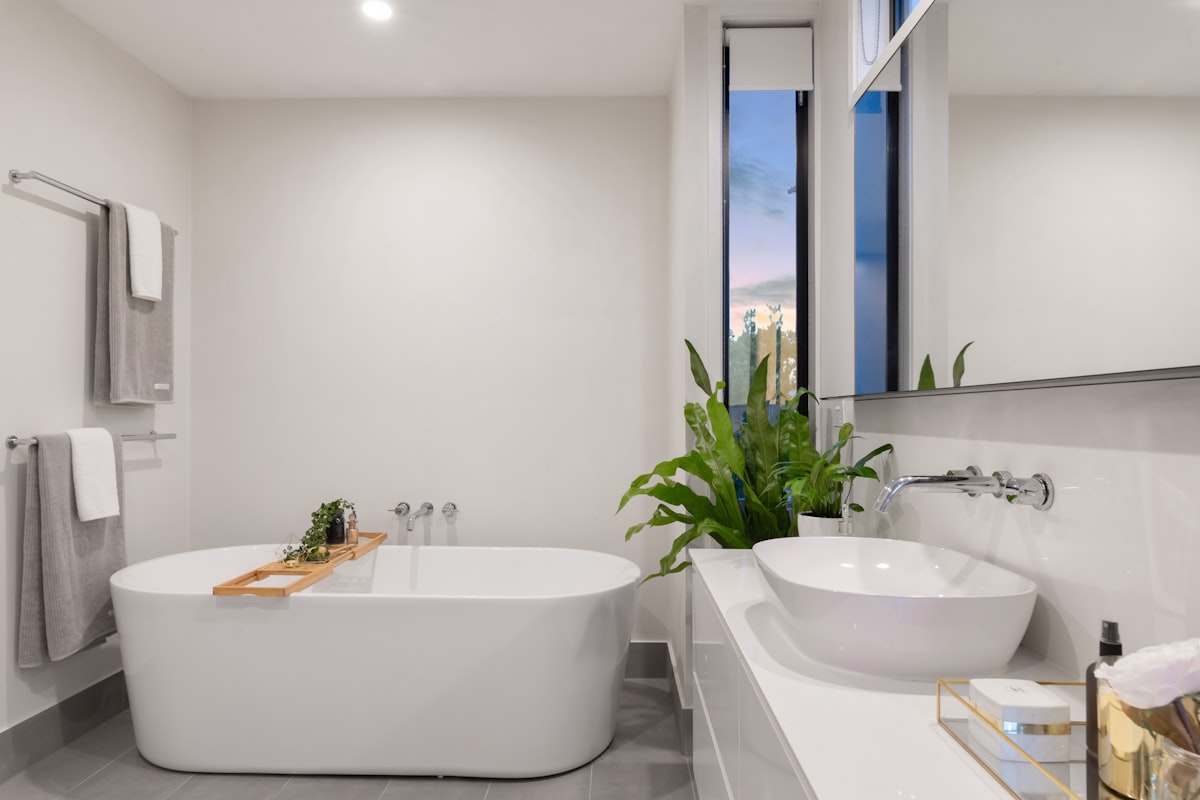
You walk into a freshly renovated bathroom, glance at the toilet, and there’s no cistern anywhere in sight. Just a clean wall and a rectangular flush plate. That’s the concealed cistern toilet — hidden inside the partition wall — and for years it’s been the standard in any bathroom remodel worth its salt.
Nobody argues with how good it looks. But the question almost nobody asks before installation is the one that actually matters: what happens when something goes wrong? Here’s what you need to know: the good, the bad, and — crucially — how to get inside it when the time comes.
What a Concealed Cistern Toilet Is and Why It’s Taken Over
A concealed cistern toilet has the water tank hidden inside the wall, mounted on a steel frame (called a carrier frame or in-wall frame). On the outside, all you see is the flush plate. The toilet pan itself can be wall-hung (suspended off the wall, not touching the floor) or floor-standing, but either way the water comes from that invisible tank.
It’s become the go-to choice for one straightforward reason: the bathroom looks bigger and cleaner. Without the old-fashioned cistern taking up space and collecting dust behind it, the wall is flat. And if the toilet pan is wall-hung, the floor mops in one easy sweep.
We’ll give it to you straight, because we fit these nearly every day: in the vast majority of bathroom renovations we carry out in Valencia, clients end up choosing a concealed cistern. Next to a traditional close-coupled toilet, the difference is striking.
The Real Advantages of a Concealed Cistern Toilet
There’s more to it than aesthetics, even if that’s what catches the eye. These are the benefits you actually feel day to day:
- More sense of space. In a small bathroom, those few extra centimetres from a traditional cistern really do count. A flat wall tricks the eye and the whole room feels larger.
- Easier to clean. No cistern lid gathering limescale, no impossible-to-reach corners at the back. With a wall-hung pan, you mop the entire floor without any obstacles.
- Quieter. Modern concealed cisterns refill with far less noise than older exposed designs. The water runs inside the wall, muffled.
- Dual flush plate. Almost all come with a two-button flush: short flush and full flush. The difference in water use adds up. According to the IDAE (Spain’s Institute for Energy Diversification and Saving), a toilet with dual flush can save up to 60% water compared to an old single-flush model.
We’ve covered the water-saving side in depth in our guide to saving water in the bathroom with real figures, because the dual flush plate is one of the upgrades that genuinely pays for itself over time.
The Drawbacks Nobody Mentions
This is where honesty matters, because the concealed cistern toilet has one snag that rarely gets explained before you sign anything.
If something goes wrong inside the tank — the fill valve, the float, a leaking seal — the mechanism is behind the wall. It’s nothing like a traditional cistern where you lift the lid and see everything at once. Here you have to access it through the flush plate opening, and sometimes that’s not enough.
The other point is cost and installation. A concealed cistern with its carrier frame costs more than a standard close-coupled toilet and requires building work: you either open an existing partition or build a new plasterboard (drywall) wall to house it. This isn’t something you knock out on a Saturday morning. That’s why it makes far more sense to install one as part of a full bathroom remodel.
How to Access a Concealed Cistern Toilet
This is the question everyone wants answered, and the good news is it’s better solved than most people expect. Every concealed cistern toilet built to current standards (CTE — Spain’s Building Technical Code) has an access route to the mechanism through the flush plate. You don’t need to break the wall for a standard fault.
Step by step:
- Turn off the isolating valve before touching anything. It’s usually set into the wall near the frame, or at the bathroom’s main water inlet.
- Remove the flush plate. Most come away by gently levering the edges with a flat-head screwdriver, or by pulling it towards you. Some models have a clip or unscrew. Be careful — they’re plastic and scratch easily.
- Behind it you’ll find the installation frame and the mechanism. Through that opening you can reach the flush valve and, on most models, the fill valve too. The parts are designed to be removed this way.
- Identify the fault (see below) and replace the specific part. Spare parts for brands like Roca or Geberit are easy to find.
Only in rare cases — a badly fitted frame, an internal leak, or an older model without standard access — do you need to open the wall. That’s the exception, not the rule.
The Most Common Faults and How to Spot Them
Concealed cisterns are generally low-maintenance, but when they do play up, it’s almost always one of these four things:
| Symptom | Likely cause | Fix |
|---|---|---|
| Water keeps running continuously | Flush valve not seating properly or worn | Replace the seal or the complete flush valve |
| Slow to fill or not filling fully | Fill valve / float clogged with limescale | Clean or replace the fill valve |
| Flush plate stays depressed or doesn’t respond | Actuator rod out of position | Reposition or replace the flush plate kit |
| Water leaking from the base of the pan | Seal between cistern and pan | Replace the connection seal |
Valencia has an extra factor worth knowing about: hard water. Much of the Valencia Region has a high limestone content in the tap water, and it attacks fill valves faster than in other parts of Spain. Don’t be surprised if a concealed cistern here needs its valve cleaned sooner than the manufacturer suggests. It’s the same problem that affects taps and shower screens — something we cover in our article on limescale on taps and shower screens in Valencia.
Concealed Cistern with Wall-Hung or Floor-Standing Pan?
A common question: the concealed cistern is almost always paired with a wall-hung toilet pan, but it doesn’t have to be. You can have a concealed cistern with a conventional floor-standing pan.
The wall-hung pan is the one that benefits most from the combination — clear floor, clean lines — but it does require a carrier frame bolted to the wall that’s built to take the weight of a person sitting down. If you’re weighing up the two options, our comparison of wall-hung vs floor-standing toilets breaks it down without any waffle, including prices and maintenance.
Frequently Asked Questions
Is it difficult to repair a concealed cistern toilet?
Not nearly as much as people fear. For the usual faults you access everything through the flush plate opening, no wall-breaking involved. Turning off the isolating valve, removing the flush plate and swapping a part is something anyone with a bit of DIY confidence can manage. Only internal leaks or badly fitted frames require opening the wall.
How long does a concealed cistern last?
The frame and tank are built to last decades. What wears out are the internal parts: fill valve and flush valve, typically somewhere between 8 and 15 years depending on use and water hardness. They’re inexpensive replacements and, as we’ve seen, accessible through the flush plate.
Can I swap the flush plate for a nicer one?
Yes, and it’s one of the simplest upgrades you can make. The flush plate is the only visible component and can be changed in minutes, as long as the new model is compatible with your frame. Always check the brand and model of your cistern before buying a replacement plate.
Does a concealed cistern use less water?
Not because it’s concealed — because almost all of them come with a dual flush plate. A modern exposed cistern with dual flush uses just as little. The real advantages of going concealed are aesthetic and practical: space and ease of cleaning.
Is it worth installing one if I’m not doing a full remodel?
It usually makes more sense as part of a full renovation. Installing a concealed cistern on its own means opening the wall or building a new plasterboard partition, retiling that section and finishing it off. If the bathroom is otherwise in good shape, that level of disruption isn’t justified purely for looks. If you’re already renovating — absolutely: make the most of it and put one in.
In Short: Sleek, Practical, and Far More Accessible Than You’d Think
A concealed cistern toilet isn’t just a magazine fantasy. It gives you a bathroom that feels bigger, is easier to keep clean, and runs quieter — and the access issue is largely solved: 95% of faults can be fixed through the flush plate, without touching the wall. The only real requirement is getting it right from the start: a quality frame, properly installed, with the isolating valve within reach.
If you’re thinking about changing your toilet or doing a full bathroom renovation, start by getting a sense of the cost with our bathroom renovation calculator, have a look at the bathroom renovations we do in Valencia and, if you want some inspiration, browse our bathroom designs. If you already know what you want, tell us about it and we’ll fit it properly — with the mechanism set up so that when it eventually needs attention, getting to it is no trouble at all.