Shower grout is the first thing to get dirty and the last thing you can properly clean. That grey tinge between tiles isn’t surface grime — it’s mould embedded in the cement, and no matter how hard you scrub, it always comes back. SPC shower panels were born precisely from that frustration. They cover the wall in large boards with virtually no joints, leaving mould nowhere to take hold.
We’re seeing them requested more and more by people who are fed up with re-grouting every couple of years. Here’s a straight-talking guide to what SPC panels actually are, what they cost, and when they make sense compared to traditional tiling.
What are SPC shower panels?
SPC stands for Stone Plastic Composite: a rigid core of stone powder (calcium carbonate) blended with PVC, pressed into panels. On top sits a printed decorative layer — marble, microcement, stone, wood effects — plus a protective wear coat. You may already know SPC as flooring, since it swept the market as a luxury vinyl tile replacement. The same technology is now made in wall-grade boards with tongue-and-groove edges designed for wet areas.
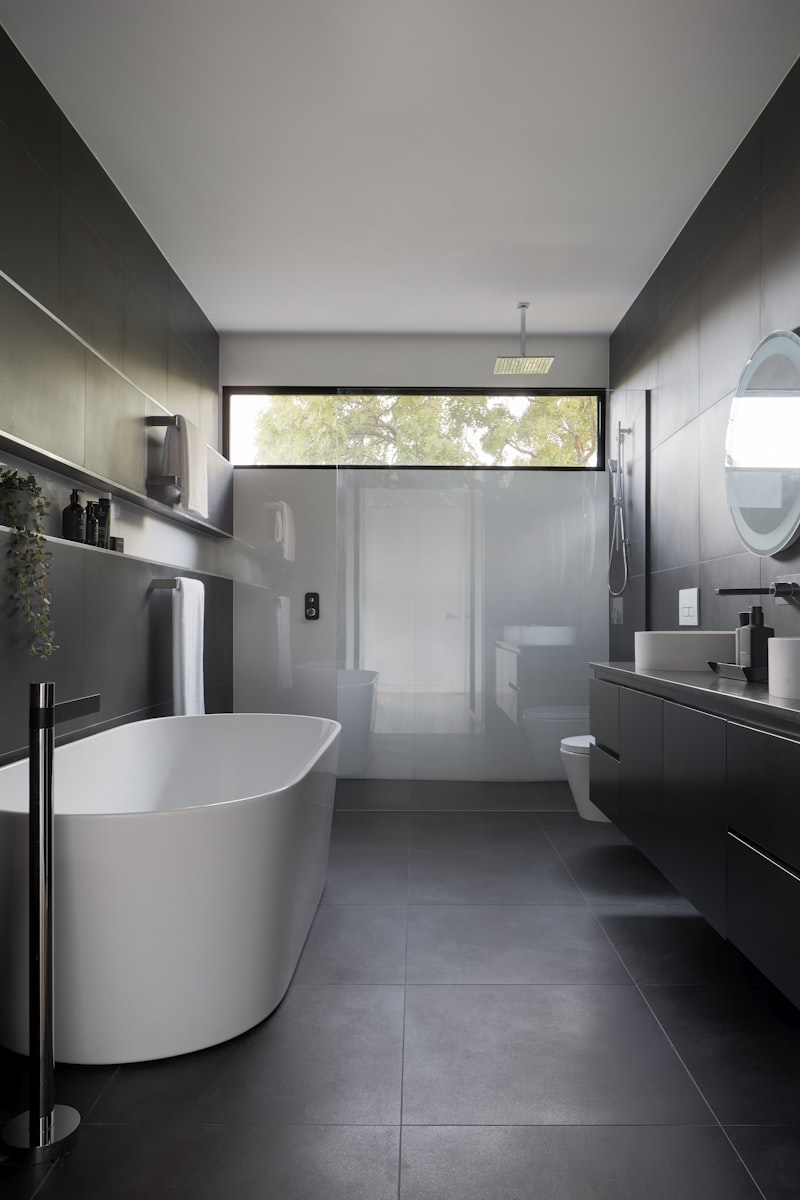
The key is the format. Instead of hundreds of small tiles each with their own grout line, you fit a handful of large interlocking panels. The result is a near-seamless wall surface. And where there’s no cement grout, there’s no grout mould.
Why SPC shower panels are winning ground on tiles
The headline pitch is simple: zero grout lines to clean. But there’s more to it than that.
- No demolition required. In most cases SPC goes straight over existing tiles without any hacking off. That means less rubble, less dust and fewer days of disruption.
- 100% waterproof. The core doesn’t absorb water, so it handles shower humidity without swelling — unlike timber panelling or inadequately protected plasterboard.
- Fast to install. A shower wall can be finished in a day or two, versus the several days needed to tile, allow mortar to set and then grout.
- Seamless appearance. If you like the look of large-format marble or microcement but don’t want the price tag or upkeep, SPC gives a similar aesthetic at a lower cost.
Our honest take: SPC doesn’t replace high-quality large-format porcelain in a premium bathroom, but it’s a solid, no-nonsense solution for renovations on a tighter budget or for anyone who wants to banish grout lines without ripping out walls. On that last point, it’s worth comparing it with covering existing tiles without removing them, which has its own set of alternatives.
What they don’t always tell you: the downsides of SPC in showers
Nothing is perfect, and we’d rather be upfront about it.
The weak point is the joints between panels and — above all — the corners and the junction with the shower tray. Even though the wall is nearly seamless, those few remaining joints are sealed with silicone or trim profiles, and everything depends on that seal. Done badly, water gets in behind the panels and you won’t see the damage until the damp patch appears. That’s why we’re insistent: SPC is unforgiving of a sloppy installer.
Another issue: the decorative layer is a printed film. A hard knock or a deep cut can expose the core underneath, which is a different colour. With ceramic tile, if it chips, it’s the same material all the way through.
And then there’s feel. It’s plastic-stone, not ceramic. Up close, anyone who’s after the genuine sensation of tile or natural stone may find it slightly off. Not everyone is fooled, and that’s fair.
SPC shower panel prices vs other options
Let’s talk money. These are indicative price ranges for materials plus installation, for a shower wall or small bathroom in the Valencia region (Comunitat Valenciana).
| Cladding | Price (materials + installation) | Joints | Can go over old tiles |
|---|---|---|---|
| SPC wall panels | €50–90/m² | Almost none | Yes, in most cases |
| Standard ceramic tile | €30–60/m² | Many | No (hacking off or levelling needed) |
| Large-format porcelain | €70–130/m² | Few | Sometimes |
| Microcement | €80–120/m² | None | Yes |
SPC sits in the middle of the market. It’s not the cheapest option — basic tiling undercuts it — but that extra cost buys you a grout-free surface and faster installation. Compared to microcement, which is also seamless, SPC tends to come in a bit cheaper and is far quicker to install, though microcement has a more handcrafted finish and is harder-wearing. If ceramic is more your thing, the sector association ASCER has manufacturer catalogues that make comparisons easy.
According to data from Spain’s national statistics office (INE), renovation costs in the Valencia area have been rising steadily for years, so anything that cuts installation time — and therefore labour cost — has genuine appeal. SPC delivers on that front.
When we recommend SPC, and when we don’t
Makes sense if: you want a grout-free shower on a controlled budget; you’re after a quick renovation without demolition; you own a rental flat and want something smart and durable without splashing out; or you have existing tiles in good condition that you can build over.
Better to look elsewhere if: you want top-end quality and authenticity (large-format porcelain or natural stone wins there); your wall is bowing or the existing tiles are hollow-sounding when tapped (you’ll need to sort that first); or you’re simply a ceramic person and the plastic-stone feel isn’t for you.
If you’re still weighing up materials, our guide to cheap vs expensive bathroom materials compares the full range without pushing any particular option. And if what’s actually bothering you is just the state of the existing grout lines, it’s worth checking whether refreshing the grout colour might be all you need — it’s considerably cheaper than a full reclad.
Installation: why this isn’t a DIY job
On paper, fitting SPC sounds straightforward: click the boards together and seal the edges. In practice, a shower is the most demanding wet area in the house. Water finds every gap. The wall needs to be flat and solid; cuts around the mixer and showerhead need to be clean and tight; and the perimeter seal has to be done properly and hold up over time.
We’ve seen it in renovations across the Cabanyal and in city-centre flats in Valencia: SPC fitted by a well-meaning handyman ends up causing damp within six months, and the “cheap renovation” turns out to be very expensive indeed. Waterproofing wet areas isn’t optional — it’s required under Spain’s Building Technical Code (Código Técnico de la Edificación, or CTE), specifically its document on habitability and health. If you’re having SPC installed, make sure whoever does it knows how to properly waterproof a shower enclosure. You can get a feel for the overall cost of your project using our renovation calculator or find out more about how we handle bathroom renovations in Valencia.
Frequently asked questions
Do SPC shower panels hold up to hot water and steam?
Yes. The core is waterproof and dimensionally stable at normal domestic temperatures. The critical point isn’t the water on the panel surface — it’s the sealing of the joints and the junction with the shower tray. Installed correctly, there’s no issue.
Can I fit SPC over my existing tiles?
In most cases, yes — provided the existing tiles are firmly bonded, don’t sound hollow when tapped, and the wall is reasonably flat. That saves you the hacking-off stage and cuts days off the job. If the old tiling is loose, that needs sorting first.
How long does SPC shower cladding last?
With good installation and normal upkeep, you’re looking at 10–15 years or more without problems. The factor that shortens its life isn’t wear on the panel itself — it’s poor sealing that lets water in from behind.
Is it cheaper than tiling?
It depends. The SPC material tends to cost a similar amount or a little more than standard tiles, but you save on demolition and labour days. When you can install it over existing tiles, the total usually works out favourably compared to a full strip-out and re-tile.
Which is easier to clean — SPC or tiles?
SPC, hands down — because there are far fewer joints. The surface is smooth and near-continuous, so a wipe with a damp cloth is all it takes. That’s genuinely its biggest advantage over traditional tiling.
Bottom line: a solid alternative, with small print
SPC shower panels aren’t a miracle product, but they solve the problem that frustrates people most: grout. If you’re after a seamless-look shower, fast installation and a mid-range price, they’re one of the most sensible options on the market right now. As with almost everything in a bathroom, what matters most isn’t the material itself — it’s who installs it and how.
Thinking about ditching the grout lines for good? Tell us about your bathroom and we’ll give you a straight answer on whether SPC is the right move or whether something else would serve you better.
Calculate your bathtub-to-shower swap price
Turnkey price regardless of size