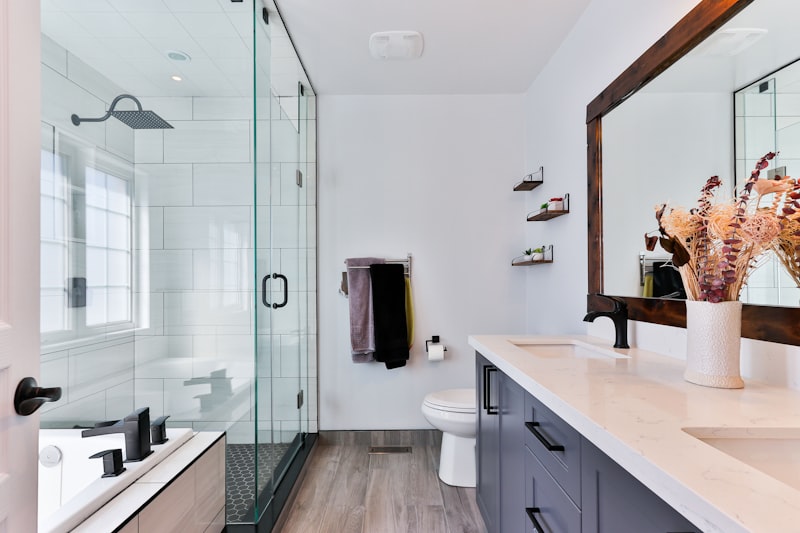
You want a grout-free bathroom — that smooth, uninterrupted look you keep seeing in design photos. Fair enough. But “seamless” doesn’t mean one thing. There are three roads to get there, and they are less alike than most people assume.
The question we hear most is microcement vs resin vs tadelakt bathroom — which one to go for. All three give you a continuous surface and can go straight over old tiles without hacking them off. That’s where the similarities end. They differ in feel, price, durability and, crucially, who can actually apply them properly. Let’s break it down.
Microcement vs Resin vs Tadelakt Bathroom: What Each Material Actually Is
Before comparing prices it’s worth getting the basics straight, because a lot of people lump all three under the vague label of “decorative cement”.
Microcement is a cement-based coating mixed with resins and very fine aggregates, applied in layers of 2–3 mm over almost any substrate: tiles, plasterboard, brick, existing floor. It goes on with a trowel, gets sanded and then sealed. The result is mineral, slightly irregular, with that characteristic cloudy patina that gives it character.
Resin (epoxy or polyurethane) is 100% synthetic. It self-levels to a glassy, near-plastic surface that is waterproof straight out of the tin. It’s the stuff used on industrial floors. In bathrooms it tends to be used for shower trays and floors more than walls.
Tadelakt is the oldest of the three by a long way: slaked lime from Marrakech, polished with a smooth river stone and treated with black soap. The finish is satin, warm and slightly veined. It’s the traditional coating of hammams, naturally waterproof. And it is pure craft — what you get depends entirely on the hands applying it.
Quick Comparison: Price, Hardness and Maintenance
Here’s the summary most people reach for first. Prices are for application in the Comunitat Valenciana, materials included, with a specialist applicator:
| Microcement | Resin (epoxy/PU) | Tadelakt | |
|---|---|---|---|
| Approx. price (€/m²) | 80–120 | 90–140 | 130–200 |
| Thickness | 2–3 mm | 1–3 mm | 3–5 mm |
| Feel | Mineral, subtle | Smooth, almost plastic | Satin, warm |
| Waterproofing | Needs sealing | Waterproof from the start | Natural (lime + soap) |
| Scratch resistance | Medium–high | High | Medium |
| Qualified applicators | Plenty | Few in residential bathrooms | Very few |
| Resealing recommended | Every 2–3 years | Rarely | Wax 1–2 times/year |
Prices shift depending on the condition of the substrate, the square meterage and the area, but the ranking stays the same: microcement is the most affordable, resin sits in the middle, and tadelakt is the premium option. Not because of brand posturing — because of the hours of skilled labour it demands.
Where Each One Wins
Microcement: the all-rounder
It’s the one we fit most often, and there’s a good reason for that. It wears well, there are plenty of competent applicators in Valencia, and it looks contemporary without trying too hard. It’s the go-to for Nordic-style bathrooms and soft industrial looks. If you want continuous walls and floor in a standard bathroom without breaking the bank, this is your material. We go into full detail in our complete guide to microcement in bathrooms.
Its weak point is the sealing. If the applicator skimps on protective coats or uses a poor-quality sealant, you’ll see lime stains and water rings within two years. Microcement done properly lasts fifteen years; done badly, it causes problems in the first winter.
Resin: waterproofing with no argument
Resin is water’s worst enemy. Zero porosity, zero grout lines, zero surfaces where mould can take hold. That’s why it’s a serious option for shower trays, where it goes head to head with ceramic and stone (we compare them in our post on resin vs ceramic vs stone shower trays).
The downsides? In residential bathroom walls almost nobody applies it, and the few who do charge accordingly. The finish can feel cold — too “laboratory” for some tastes. And if it gets scratched or scorched (watch out with hair straighteners), touching up a spot invisibly is tricky. Our honest take: for floors and shower trays it’s excellent; for lining an entire bathroom in resin walls, there are usually better options at that price point.
Tadelakt: artisan luxury
Tadelakt is in a different league altogether. It has depth, plays beautifully with light, and ages with real dignity. In a spa-style bathroom or a high-end property, no microcement comes close to that touch. If you’re going for a spa bathroom at home, tadelakt is probably the most beautiful material you can put on those walls.
But let’s be straight: finding someone who can apply it properly takes work. It’s not a case of trowelling and sealing — you have to compress the lime at precisely the right moment in the setting process, and that takes years to learn. If someone who watched a YouTube tutorial has a go at it, it will flake. Ask only for specialists with completed projects you can go and see in person.
The Substrate Matters More Than the Material
Whichever of the three you choose, if the substrate is wrong, the finish will fail. All three are coatings a few millimetres thick — they are not magic. They need a solid base, free of movement, no hidden damp behind it, and structural joints left intact.
That’s why the first thing we look at during a remodel isn’t the colour chart — it’s the condition of the wall. We check for leaks and loose tiles underneath. Applying microcement over tiles that are moving is money down the drain, and we’ve seen it in flats in El Cabanyal more than once. Waterproofing the substrate is not optional either: the Código Técnico de la Edificación (Spain’s Building Technical Code, the regulatory standard for all construction) requires it in wet zones, and a continuous finish does not replace it.
If you’re weighing up these seamless options against classic finishes, our bathroom materials guide puts them in context alongside porcelain, natural stone and the rest. And if you’ve already decided you’re going ahead, take a look at how we handle bathroom renovations in Valencia.
One thing almost nobody mentions: according to ASCER (Spain’s ceramic tile industry association), tiles still account for the vast majority of bathroom surface sales. Seamless finishes are fashionable, yes, but they remain a minority. Not because they’re inferior — because they demand more craft and more maintenance, and that filters out who they actually suit.
Maintenance: the Small Print
| Task | Microcement | Resin | Tadelakt |
|---|---|---|---|
| Daily cleaning | Neutral soap | Neutral soap | Neutral or black soap |
| Avoid | Acids, abrasive pads | Direct heat | Abrasive products |
| Resealing | Every 2–3 years | Rarely | Wax 1–2 times/year |
None of these finishes is “fit and forget”. Microcement needs resealing every couple of years. Tadelakt needs its soap wax applied regularly to maintain waterproofing. Resin is the most low-maintenance, but in exchange it’s the hardest to repair without it showing. Choose with an eye on what you’re willing to do every year, not just on how it looks on handover day.
Frequently Asked Questions
Which is better for a bathroom — microcement or resin?
It depends on where. For walls and a warm mineral look, microcement. For floors and shower trays where total waterproofing is non-negotiable, resin. Across a full set of bathroom walls, microcement usually gives better value for money.
Can microcement go over existing tiles without removing them?
Yes, and that’s one of its biggest selling points. It goes directly over the existing tiling provided it’s sound and properly bonded. If any tiles are loose or there’s damp behind them, that has to be sorted out first.
Is tadelakt genuinely waterproof?
It is, by nature of its lime-and-black-soap composition — no synthetic sealants required. That’s why it’s been used in hammams for centuries. It does maintain its waterproofing only if it’s re-waxed regularly.
How long does a microcement bathroom last?
Properly applied and sealed: 10 to 15 years without aesthetic problems. The two critical factors are the applicator’s skill and keeping up with resealing every 2–3 years. Applied badly, staining can start within the first year.
Which of the three is the most expensive?
Tadelakt, by some margin, because of the artisan labour hours it requires. Microcement is the most affordable and resin sits in between. To get a feel for the total cost of your remodel, use our cost calculator.
Don’t Fall for the Photo — Fall for Who’s Applying It
All three finishes can look extraordinary. And all three can look awful. The difference is less about the material and more about the hands doing the work and the substrate underneath. A mid-range microcement applied well will beat an expensive tadelakt applied by someone winging it, every single time.
So before you decide between microcement, resin or tadelakt, think about how you’ll actually use the bathroom, how much upkeep you’re willing to do, and — above all — demand to see finished work from your applicator before signing anything. Got a bathroom in mind but not sure which finish fits? Tell us about it and we’ll give you a straight answer on which seamless finish makes sense for you — or whether something else entirely is the better call.