You pick the tray, the taps, the tiles. Then you get to the shower screen and grind to a halt. Hinged, sliding or fixed. It sounds like jargon, but it’s one of those decisions you feel every single day: the thing you open and close every morning, clean every week, and that decides whether your bathroom feels spacious or like a broom cupboard.
The first thing to get straight when choosing between a shower screen hinged sliding fixed format is that there is no universally best option. There’s one that fits your bathroom and two that will give you grief. The right choice depends on how much room you have in front of the shower, how often it gets used, and who’s using it. Here’s how to work it out yourself before you even ask for a quote.
Shower screen hinged, sliding or fixed: the difference that actually matters
The key difference is space. A hinged shower screen opens like a door — outwards, or in both directions. It needs clear floor space in front to swing open. A sliding shower screen runs on a track; the panels glide past each other and take up zero extra room, which is why it’s the go-to solution for smaller bathrooms. A fixed screen (also called a walk-in panel) doesn’t open at all — it’s a single pane of glass, designed for larger trays where you simply walk in from the open side.
That’s the golden rule. If you’ve got a toilet, a vanity unit, or a wall sitting just in front of the shower, a hinged door will bang into something every time you step out. In that situation, a sliding or fixed screen wins hands down.
Hinged shower screen: when it’s the right call
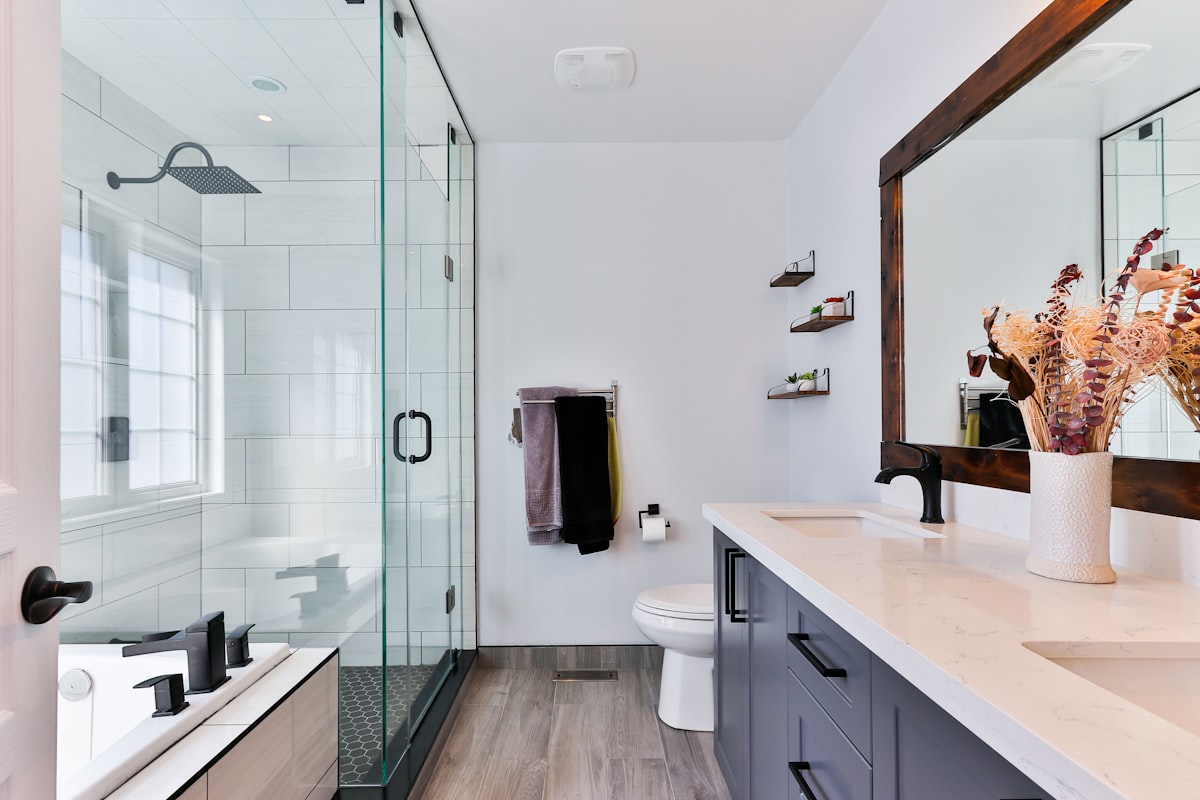
A hinged screen is the most comfortable to use day-to-day and the easiest to clean — because when the panel swings open, you can reach both sides of the glass. There’s no bottom track, so you don’t get that gunky build-up of limescale and soap that collects in a sliding door’s lower rail. If you’ve ever had to scrub out a sliding door runner, you know exactly what we mean.
The trade-off is space. A hinged panel needs roughly 50–60 cm of clear floor in front of it to open properly. In a larger bathroom, or where the shower sits in an unobstructed corner, a hinged screen is usually our first recommendation. It also works brilliantly as a hinged door on a recessed shower alcove where the opening is narrow.
The weak spot: in a small bathroom, water can drip out when you swing the door open if you haven’t thought through the direction of opening. And if you have young children or elderly family members, a door that swings out unexpectedly can be a nuisance.
Sliding shower screen: the lifesaver of small bathrooms
This covers roughly 70% of the bathrooms we see in a typical Valencian flat — narrow rooms with the shower facing the basin or the loo. A sliding screen doesn’t steal a single centimetre when opening, because the panels simply overlap. That’s why it’s the most common type we install in flats across the Eixample and Ruzafa, where every square metre counts.
The price of that convenience is maintenance. The bottom rail collects limescale, hair, and soap residue, and the rubber seals get grimy. It’s not a disaster, but it does need regular attention. Modern sliding screens with a top-hung roller and a concealed lower guide are a big improvement on cheaper open-rail designs. If you want it looking good long-term, our guide on how to clean your shower screen and tray properly covers everything.
Our honest view, after fitting hundreds of these: for a small bathroom in daily use, a good-quality sliding screen with slim-profile framing is the safest bet. It causes far fewer headaches than people expect.
Fixed or walk-in shower screen: minimalism with conditions
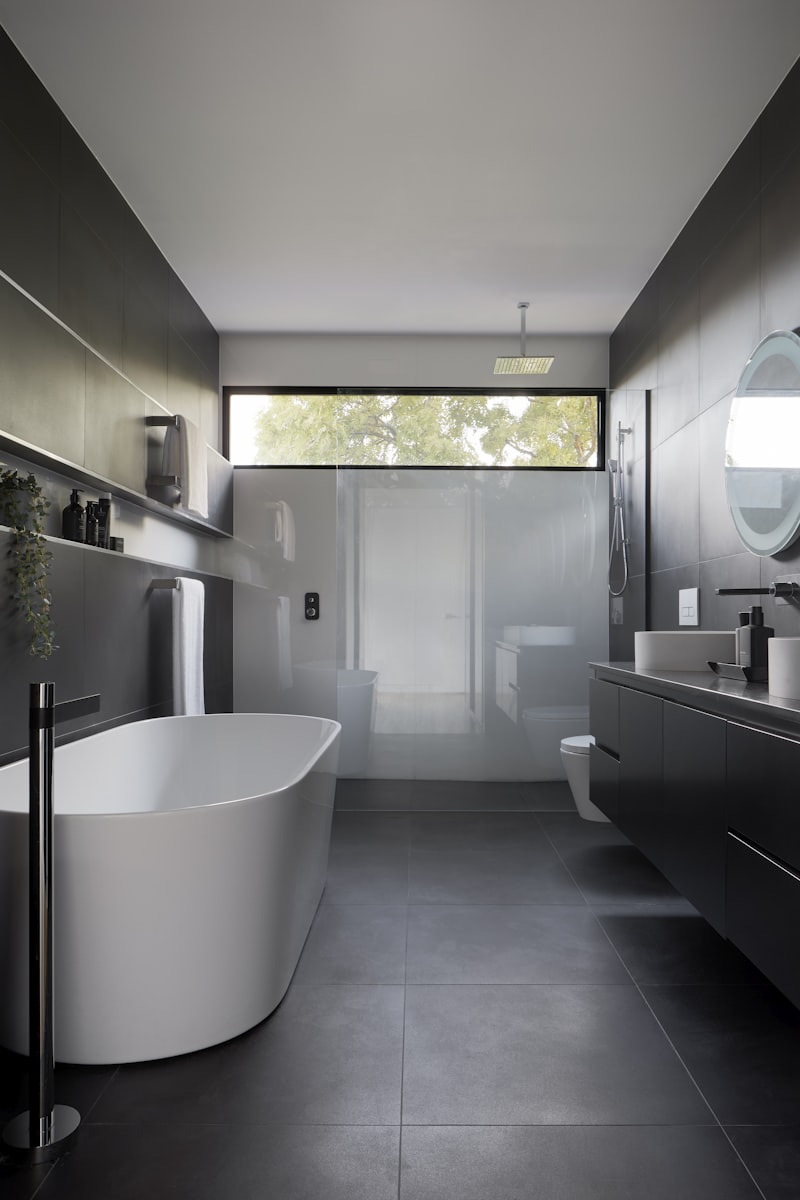
The fixed panel is a single sheet of glass with no door. You walk in from the open side. It’s the look that’s dominated bathroom renovations in recent years — clean, open, straight out of a magazine. We go deeper on this format and all the others in our guide to shower screen types and how to choose yours.
There are two conditions that catch people out. First: you need a large tray and a proper slope towards the drain, because without a door the water will head for the bathroom floor; a 90–100 cm panel on a short tray will leave the floor flooded. Second: it’s colder, because the open gap lets the steam out. In winter, in a Valencian bathroom without central heating, you notice.
When there’s plenty of space and the tray is properly sized, a fixed screen is hard to beat. When there isn’t, it’s the worst choice you can make.
Quick comparison
| Type | Space needed | Indicative price | Maintenance | Best for |
|---|---|---|---|---|
| Hinged | Clear space in front (50–60 cm) | Mid-range | Easy (no bottom rail) | Larger bathrooms, corner showers |
| Sliding | Minimal — no swing clearance | Mid to low | Rail needs regular cleaning | Small and narrow bathrooms |
| Fixed / walk-in | Large tray required | Mid to high | Easiest of all | Spacious bathrooms, open aesthetic |
Prices vary considerably depending on dimensions, framing, and above all the thickness of the glass. If you’re going to invest in a quality screen, it’s worth reading our guide on shower screen glass thickness: 6, 8 or 10 mm first — that’s where a good chunk of the budget goes, and it’s what determines how solid the screen actually feels.
The glass and its treatment matter more than the format
It doesn’t matter which type you choose if the glass is poor. Always ask for toughened safety glass: if it breaks, it shatters into thousands of blunt fragments rather than razor-sharp shards. This is a requirement under Spanish building regulations — specifically the Código Técnico de la Edificación (CTE), the national building code — and any reputable company will only fit toughened glass as standard.
The other thing worth paying for is an anti-limescale coating (a hydrophobic treatment applied to the glass surface). Valencia’s water is genuinely hard: average calcium hardness in the city sits around 60–65 French degrees, according to data from Global Omnium, the company that supplies Valencia’s drinking water. That means scale — a lot of it. A screen without a limescale treatment in Valencia will be covered in white marks within weeks. With the coating, a quick wipe with a squeegee keeps it clear. It’s one of those things that sounds like an optional extra but is really an investment. Manufacturers such as Roca specify which glass panels include it as standard in their technical datasheets.
For expats from the UK or Northern Europe: hard water is less common in many parts of Britain, so the limescale issue can catch people off guard. In Valencia it’s non-negotiable — budget for the coating.
So, which one should I choose?
Three sentences. Small bathroom in daily use: a quality sliding screen. Larger bathroom with the shower in a clear corner: hinged. Big bathroom with a well-sized tray and a taste for open aesthetics: fixed or walk-in. And whatever you choose: toughened glass with an anti-limescale coating, wherever you live.
The most useful thing before committing to anything is having someone measure your bathroom and tell you what actually fits — because everything looks generous on a floor plan until you realise where the washing machine has to go. If you’d like a rough idea of costs, try our online calculator. If you’d rather have us look at it properly, tell us about your bathroom and we’ll give you a straight answer about which screen works — no upselling. We’ve been doing bathroom renovations in Valencia for years, and this is exactly the sort of call we make every day.
Frequently asked questions
Which shower screen takes up less space — hinged or sliding?
The sliding screen. The panels glide past each other and don’t encroach on the bathroom at all when open. A hinged door needs clear floor space to swing out, so in a tight bathroom the sliding option almost always wins.
Does a fixed shower screen let water escape?
Yes, if the tray is small. Without a door, water can spill out through the open side. A fixed panel only works properly with a large tray and a good fall towards the drain; in a short shower enclosure it’s not recommended.
Which is the easiest to clean?
Hinged and fixed screens, because neither has a bottom rail where limescale and soap build up. Sliding screens require regular cleaning of the runner — though modern concealed-guide designs make this much more manageable.
Is a limescale-resistant coating worth it in Valencia?
Absolutely. With water this hard, a screen without treatment will be streaked with white marks in a matter of weeks. The coating cuts down on those marks dramatically and means a quick wipe keeps the glass clear. It’s the upgrade we recommend most.
What glass thickness do I need?
For standard-size hinged and sliding screens, 6 mm is perfectly adequate. For large fixed panels and walk-in enclosures, 8 or 10 mm gives better stability and a more solid feel. We cover this in full in our glass thickness guide.